
Suggested itinerary · 7 days
Seven days in Romania
Bucharest to Cluj-Napoca in a week: the Prahova valley, three castles, two Saxon citadels, a mountain road and a salt mine.

Where to stay in Bucharest
See the hotels and apartments available on Booking.com · This is an affiliate link with our partner. Europe by Giddo may earn a commission from a purchase made through it, at no extra cost to you.
This is a one-way week that starts in Bucharest and finishes in Cluj-Napoca, which means you can fly into one and out of the other and never double back. It is built around a hire car; the same route by train and bus is possible but loses the fortified churches and the mountain road.
Our partner
Travel insurance · 5% off for our readers
Get a quoteThe shape is simple. Two days getting out of the south and up through the Prahova valley, three days across the Saxon heart of Transylvania, and two days in the west and north. Nothing is rushed except day six, which is long.
One caution before you plan: the high section of the Transfăgărășan is closed by snow for most of the year and normally opens only for the summer months. If you are travelling outside that window, day five has an alternative below.
Day by day
-
Day 1
Bucharest
Arrive, and give the capital a full day before leaving it.

Bucharest, the metro Credit: Europe by Giddo Illustration generated with AI. It is not a photograph of this place. How we use AI Most people treat Bucharest as an airport with a city attached and regret it. Give it a day.
The centre is a mix of Belle Époque boulevards, Orthodox churches wedged between apartment blocks, and the enormous Communist-era rebuilding of the 1980s. The Old Town around Lipscani is compact and busy in the evening; the Village Museum by Herăstrău park collects rural buildings from across the country and is the fastest introduction to where you are going in the rest of the week.
- Bucharest Base yourself near the centre; the old town and the main museums are walkable from one another.
- Palace of the Parliament Book ahead — entry is by guided tour only, and it is worth seeing precisely because the scale is so hard to believe from outside.
-
Day 2
Sinaia and Peleș Castle
Climb into the Prahova valley and change climate.
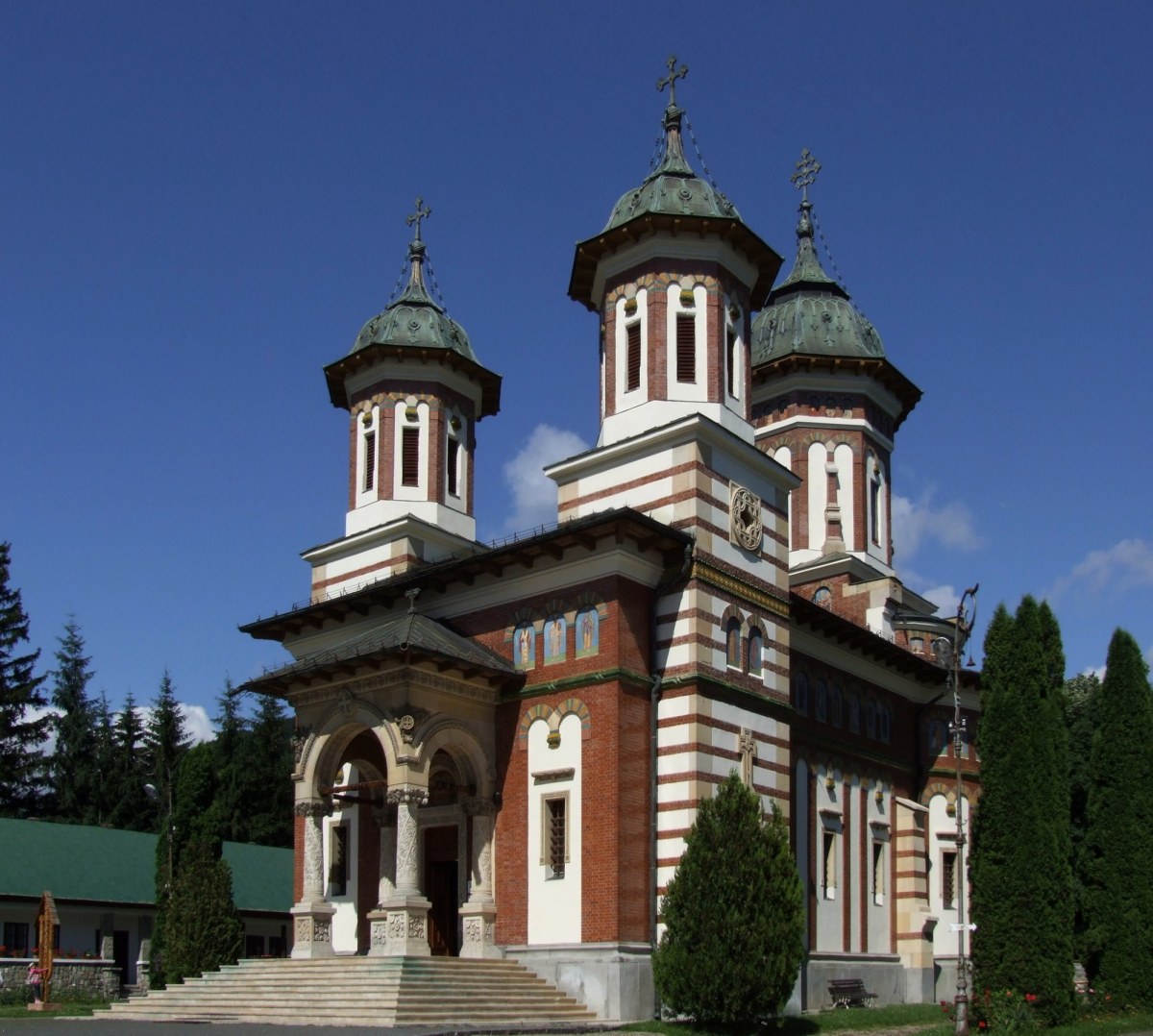
The Great Church of Sinaia Monastery Credit: Europe by Giddo Leave Bucharest northwards and the plain gives way to the Prahova valley, the corridor that carries road and railway up into the Carpathians.
Sinaia grew up around a seventeenth-century monastery and then became the summer resort of the Romanian royal family, which is why it has both mountain air and an unexpected amount of nineteenth-century grandeur. It is a short day's drive, so there is time to walk up towards the Bucegi plateau or take the cable car.
- Sinaia A small mountain town; the monastery and the casino building are both a few minutes from the station.
- Peleș Castle The Neo-Renaissance royal summer residence — extravagant, intact, and much more interesting inside than its fairy-tale exterior suggests.
-
Day 3
Over the pass to Brașov and Bran
Into Transylvania proper.
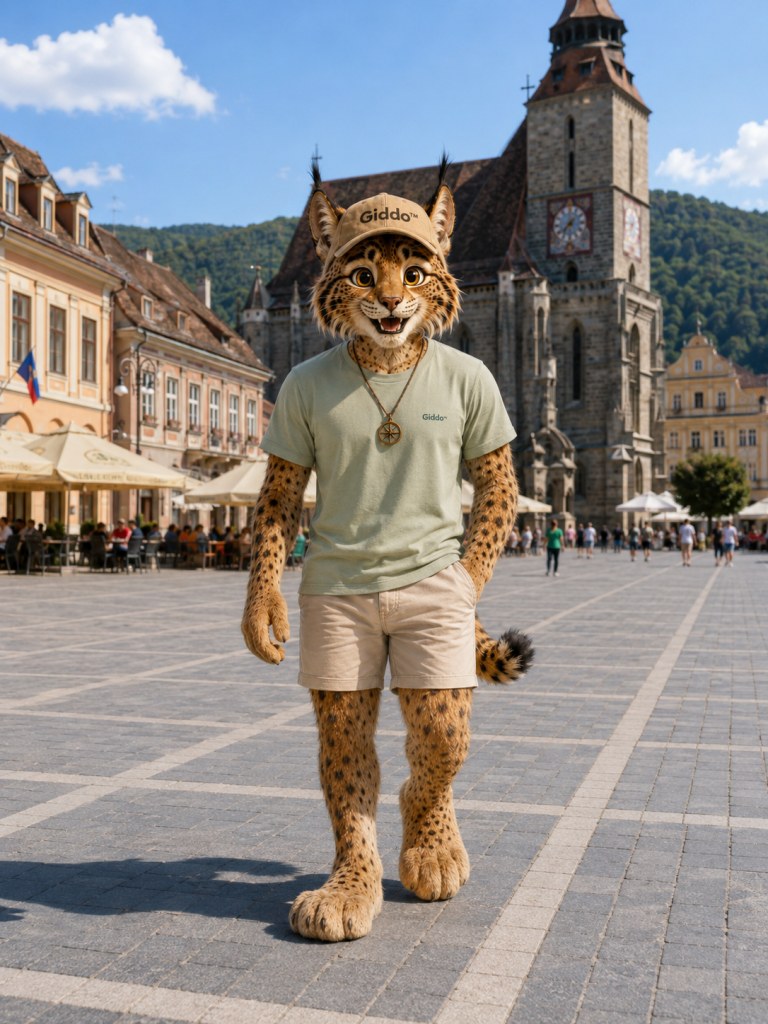
Brașov, the Council Square Credit: Europe by Giddo Illustration generated with AI. It is not a photograph of this place. How we use AI The road climbs over the pass at Predeal and drops into Transylvania. Brașov is the first Saxon town you meet and the best base of the week.
Bran is half an hour south-west and is easiest as an afternoon out from Brașov rather than a separate stop. Go late in the day if you can; the coaches come in the middle.
- Brașov The Council Square, the Black Church and Mount Tâmpa are all within a few minutes of one another.
- Bran Castle A genuine medieval customs post on a rock, later a royal residence. The Dracula connection is a marketing invention — enjoy the building instead.
-
Day 4
Sighișoara
A walled hill town where people still live.
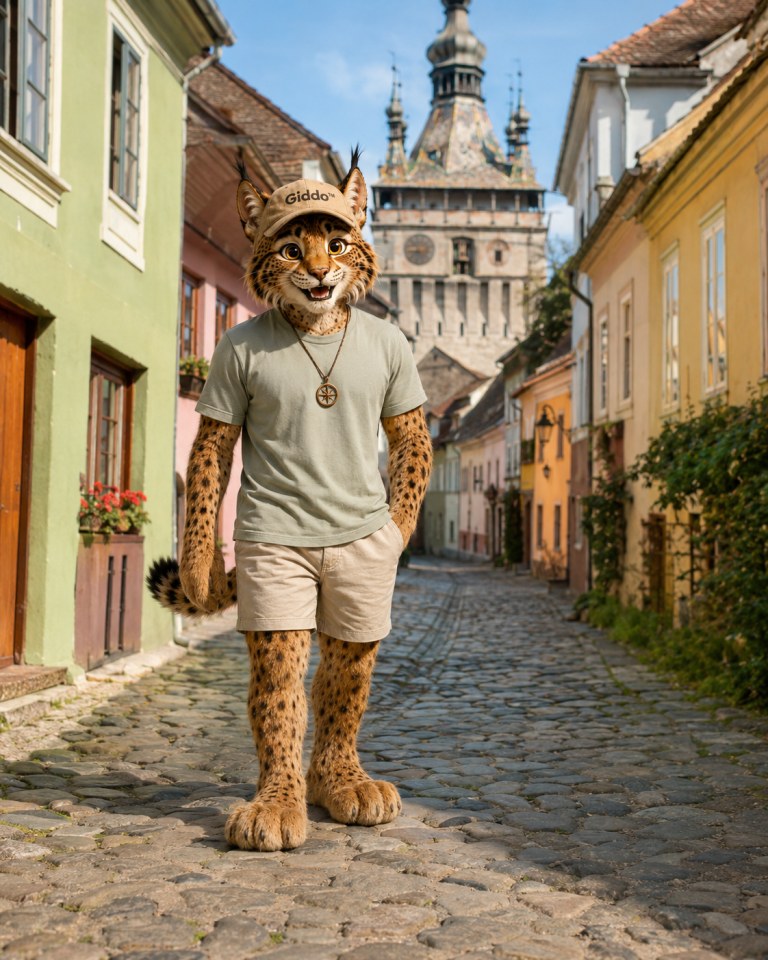
Sighișoara, the Clock Tower Credit: Europe by Giddo Illustration generated with AI. It is not a photograph of this place. How we use AI Two hours north-west of Brașov, Sighișoara is a UNESCO-listed Saxon citadel that never became a museum: the walls, the towers and the cobbled lanes are still an inhabited part of the town.
It is small enough to see in an afternoon, which leaves the evening — when the day visitors have gone and the citadel is nearly empty — as the best part. Stay the night inside the walls if you can.
- Sighișoara The Clock Tower, nine surviving guild towers and the covered stairway up to the hill church.
-
Day 5
Sibiu, and the mountain road
The most attractive squares in Romania, then the Făgăraș.
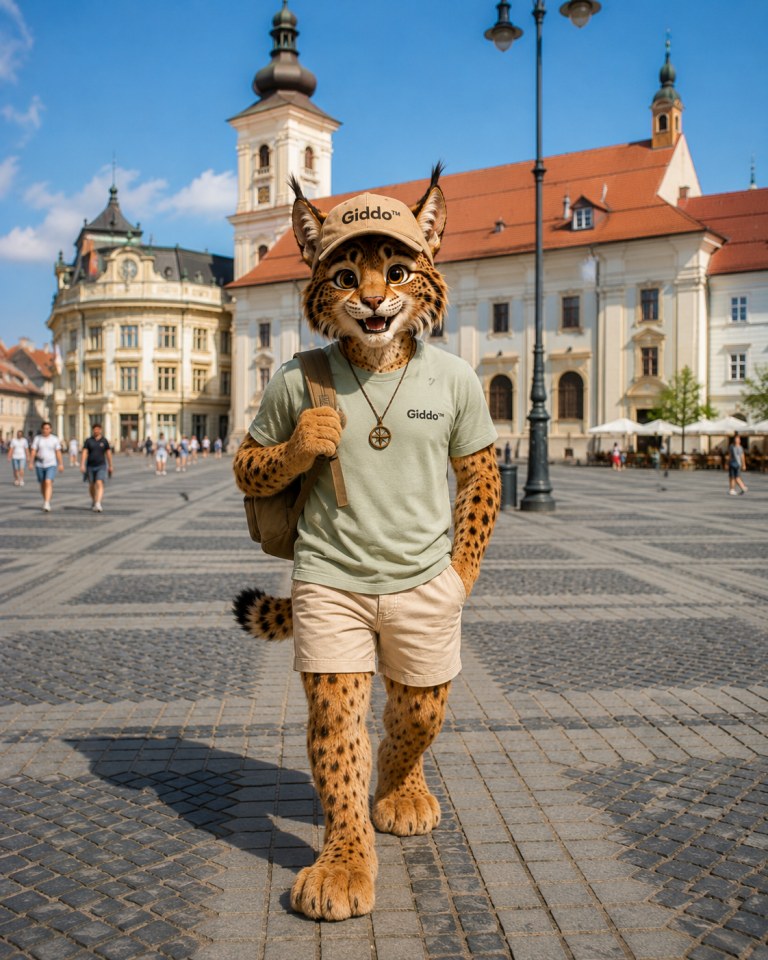
Sibiu, the Large Square Credit: Europe by Giddo Illustration generated with AI. It is not a photograph of this place. How we use AI Sibiu is a couple of hours west and is the polished one: three linked squares, the Bridge of Lies, the Brukenthal collection, and roofs with eyelid windows that appear to watch the street.
If the season allows, the Transfăgărășan starts south of the city and is the drive of the trip. If it does not, the fortified Saxon churches at Biertan and Viscri are the alternative and are worth a day in their own right.
- Sibiu Base for the night; the old town is compact and the fortified churches are within an hour in several directions.
- Transfăgărășan Open only in the warmer months — check the current status before committing a day to it. Outside the season, drive the fortified church villages instead.
-
Day 6
Corvin Castle and Sarmizegetusa Regia
The longest day: a Gothic fortress and a Dacian capital.
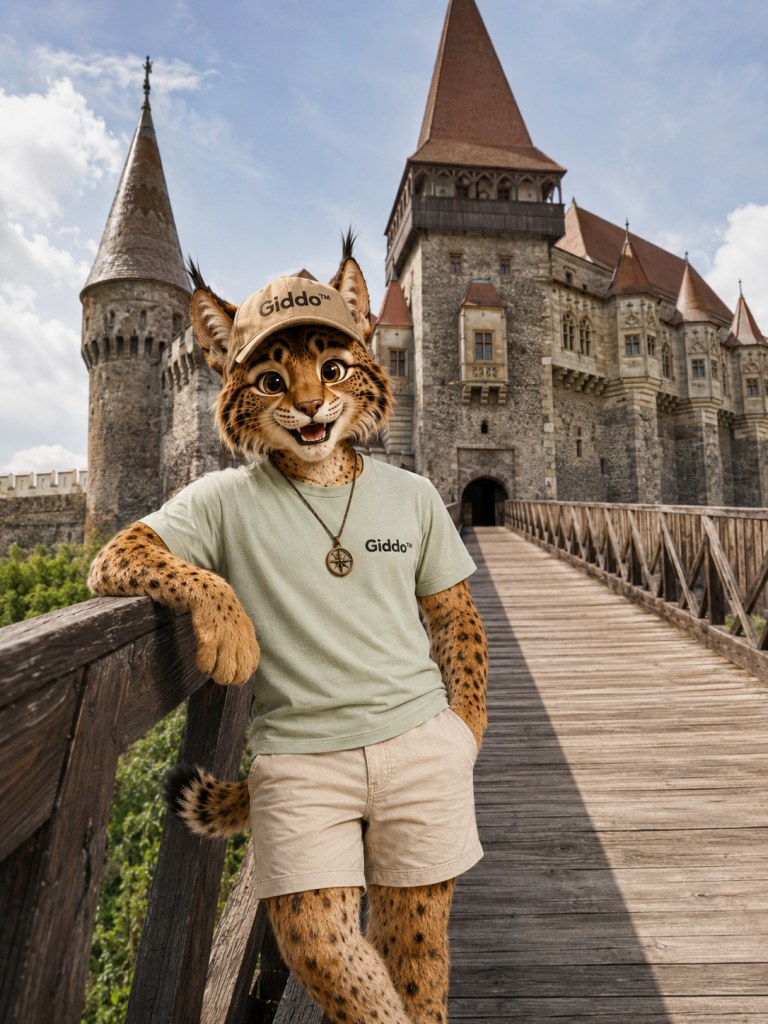
Corvin Castle Credit: Europe by Giddo Illustration generated with AI. It is not a photograph of this place. How we use AI This is the day that needs an early start. Corvin Castle at Hunedoara is the castle everyone pictures when they hear Transylvania — a fifteenth-century Gothic fortress on a rock, entered across a long wooden bridge.
Sarmizegetusa Regia, up in the Orăștie mountains, is the opposite: no standing buildings, just the terraces and sanctuary plan of the Dacian capital the Romans destroyed, in forest at over a thousand metres. The last stretch of road is rough. Doing both in one day is possible but leaves nothing spare.
- Corvin Castle One of the largest castles in Europe, rebuilt by John Hunyadi in the fifteenth century.
- Sarmizegetusa Regia The Dacian capital before the Roman conquest, UNESCO-listed. Allow for a slow approach road and a walk at the end of it.
-
Day 7
Turda and Cluj-Napoca
Underground, then a city with a university in it.
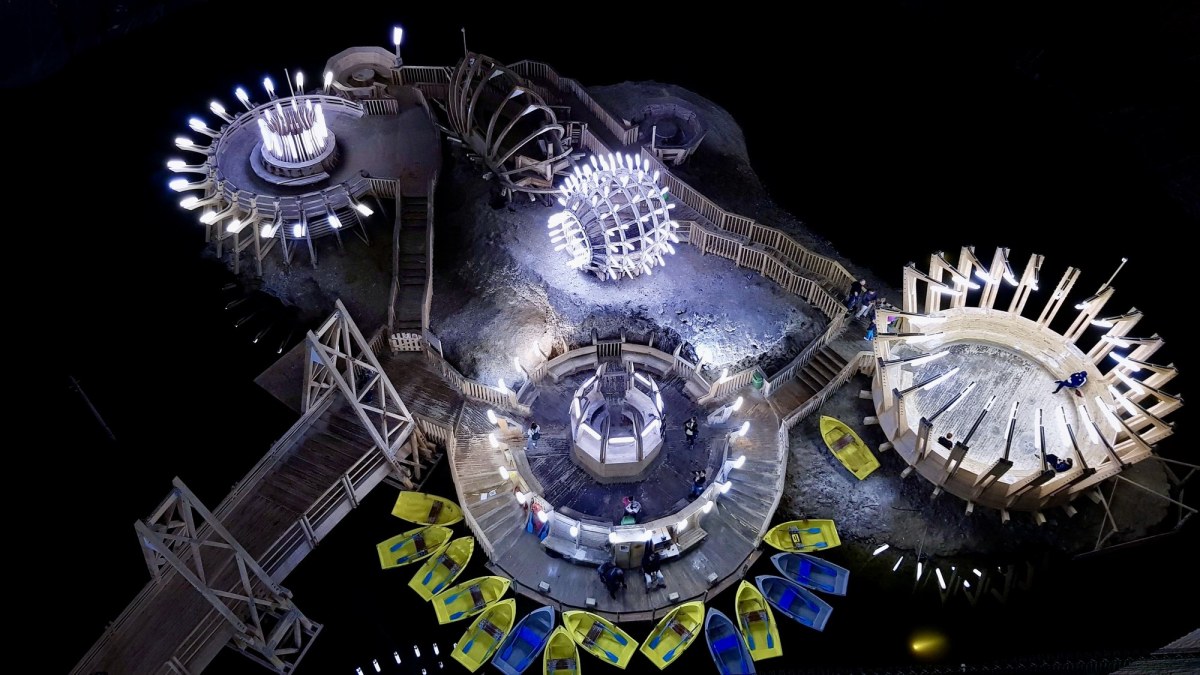
The Turda Salt Mine seen from above, with its lit platforms and the boats on the underground lake Credit: Europe by Giddo North towards Cluj, the Turda salt mine is the last surprise of the week: worked since antiquity, industrially until 1932, and now fitted out inside its own enormous chambers, with a lake and rowing boats at the bottom of one of them.
Cluj-Napoca finishes the route. It is the largest city in Transylvania and the least medieval in feel — a student city with a Gothic hall church in the main square, a long café culture and an airport to fly home from.
- Turda Salt Mine Take a warm layer: the temperature underground is constant and low whatever the weather above.
- Cluj-Napoca St Michael's Church and the main square, and the easiest departure point in the region.


None of these stops has a location on file yet, so this itinerary is not on the map.