
Travel story
Giddo in Brașov
A portrait of the Saxon town under Mount Tâmpa — the square, the Black Church, one of the narrowest streets in Europe, and the quarter outside the walls.
Where to stay in Brașov
See the hotels and apartments available on Booking.com · This is an affiliate link with our partner. Europe by Giddo may earn a commission from a purchase made through it, at no extra cost to you.
Some towns take a while to show you what they are. Brașov does it in about four minutes — the time it takes to walk in from the bus stop, turn a corner, and find yourself in a square with a mountain standing at the end of it.
Our partner
Travel insurance · 5% off for our readers
Get a quoteThis is a portrait of the place rather than a diary of a visit. Nothing here is a report of one particular morning; it is what the town is, and what it tends to do to people who arrive in it.
The square, and the mountain behind it
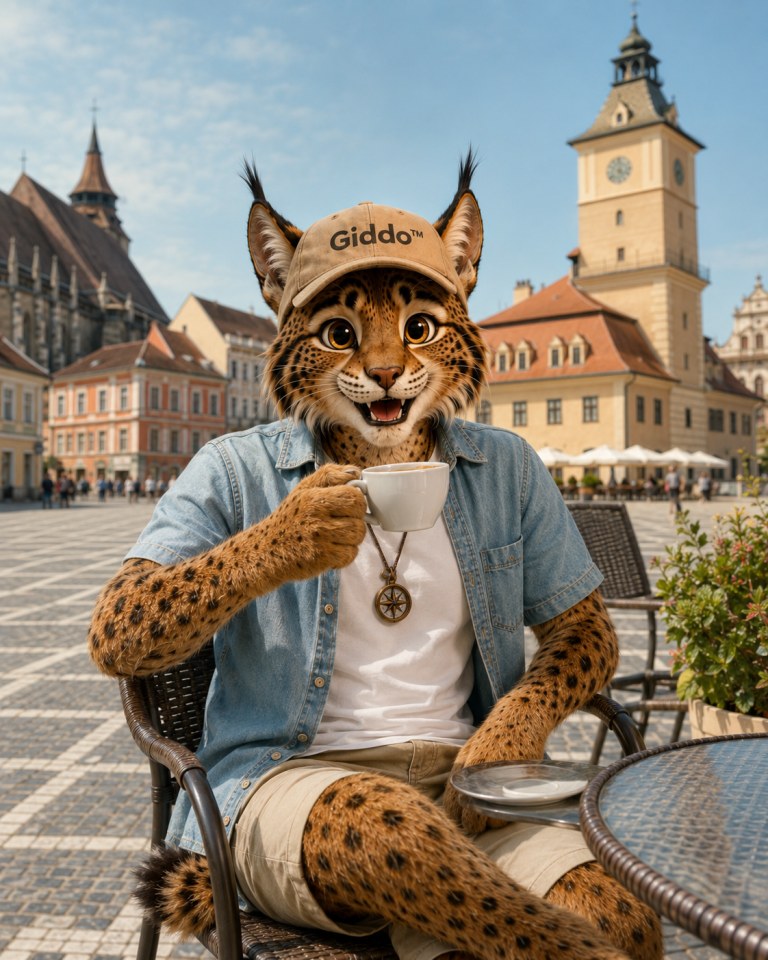
The Council Square is the shape of the town's whole argument. It is long and slightly triangular, ringed with painted merchant houses in ochre and dusty pink, with the old council building marooned in the middle like a ship that stopped. Cafés put chairs out along the edges. Children chase pigeons. None of that is unusual in Central Europe.
What is unusual is the wall of forest at the end of it. Mount Tâmpa comes down almost into the square, close enough that the town simply stops where the trees begin, and on the slope somebody has installed enormous white letters spelling out the name — a gesture borrowed from another continent that should be ridiculous and somehow is not.
You can walk up it on a zigzag path that switches back through beech woods, or take the cable car and feel slightly guilty about it. From the top the town lies below in one piece: the red roofs, the black spire, the walls, and then the plateau opening out north towards everything else in this guide.
A church named after a fire
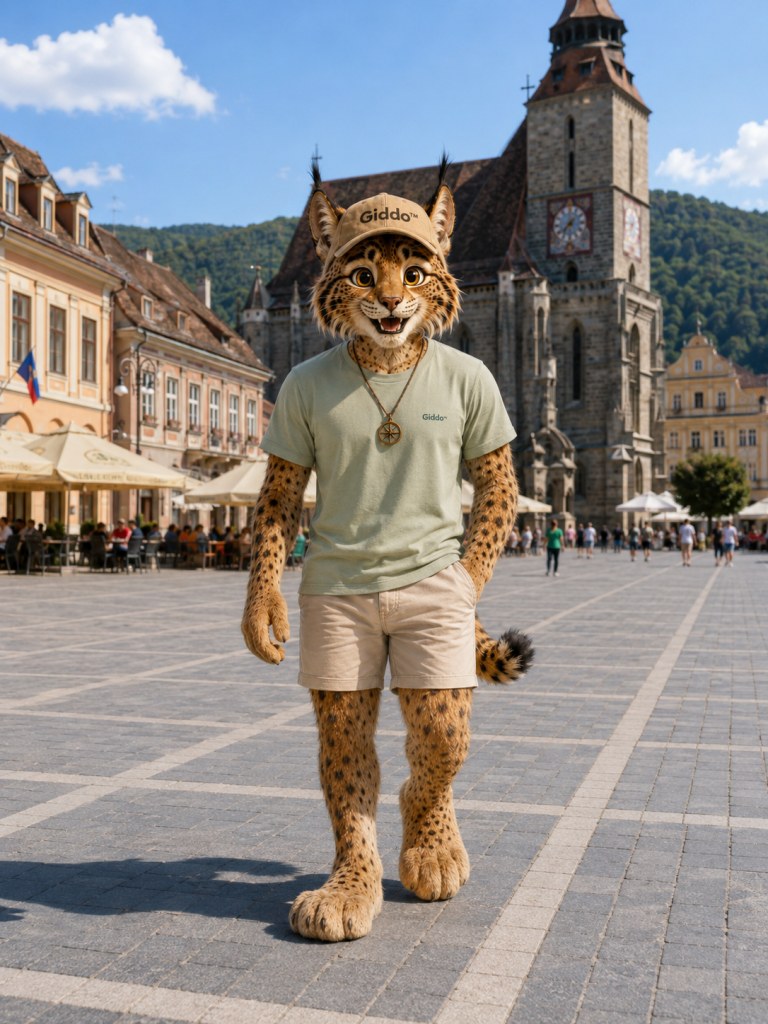
The Black Church is the largest building in the old town by a considerable margin, and it is not subtle about it. It took the better part of a century to finish, in the Gothic manner, and it got its name from a fire in 1689 that swept the town and left the stone scorched. The soot has long been cleaned off; the name stuck, as names do.
Inside it is high, plain and cold in the way that big northern Gothic churches are, and then you notice the carpets. There are a great many of them, Anatolian, hung along the galleries and over the balconies — brought back by merchants trading south over the mountains and given to the church across the centuries. It is one of the largest such collections anywhere outside Turkey, and it turns a severe grey interior into something quietly extraordinary.
There is an organ, and in the warmer months there are recitals on it. The sound in that space is worth arranging a day around.
A street you can touch both sides of
A few minutes from the square, between two ordinary buildings, there is a gap. Strada Sforii — Rope Street — is a passage a little over a metre wide, laid out originally so firefighters could get between the blocks, and it is regularly listed among the narrowest streets in Europe.
It takes half a minute to walk. The walls are painted, repainted and written on. There is nothing at either end. It is completely pointless and everybody does it, which is a fair description of a lot of the better things about travelling.
The walls, and who was allowed inside them
Brașov was Kronstadt: one of the seven fortified towns the Transylvanian Saxons built, and for centuries a walled, German-speaking trading town with the right to say who came in. Parts of the defences are still standing — the White Tower and the Black Tower up on the slopes, long stretches of wall, and Catherine's Gate with its four corner turrets, the only original town gate that survived.
The other half of that story is just outside it. The Șchei quarter is where the Romanian population lived, because for a long time they were not permitted to settle within the walls and had to pay to pass through the gate to trade. It has its own centre, its own square and the church of St Nicholas, with one of the earliest Romanian-language schools beside it.
Walking from one to the other takes ten minutes and crosses several centuries of who was allowed to be where. Brașov does not hide this, which is to its credit; the two quarters are simply both there, and the difference in the architecture tells you the rest.

What the town is for now
Modern Brașov is a working city of a quarter of a million people with the old town at its heart, which keeps the centre from becoming a stage set. There are students. There are people doing their shopping. The square fills and empties on the rhythm of a place people live in rather than only visit.
It is also the natural base for everything around it — Bran and its castle down the pass, the ski slopes at Poiana Brașov on the shoulder of the mountain, the fortified churches out in the hills, and the road north to Sighișoara. You can do all of that and come back each evening to the same square, which is the argument for staying put here rather than moving hotel every night.
That is the thing about Brașov. It is not the most beautiful town in Transylvania, or the oldest, or the strangest. It is the one that is easiest to be in — and after a week of driving mountain roads, that turns out to matter more than any of the rest.