
Where to stay near Sagrada Família
See the hotels and apartments available on Booking.com · This is an affiliate link with our partner. Europe by Giddo may earn a commission from a purchase made through it, at no extra cost to you.
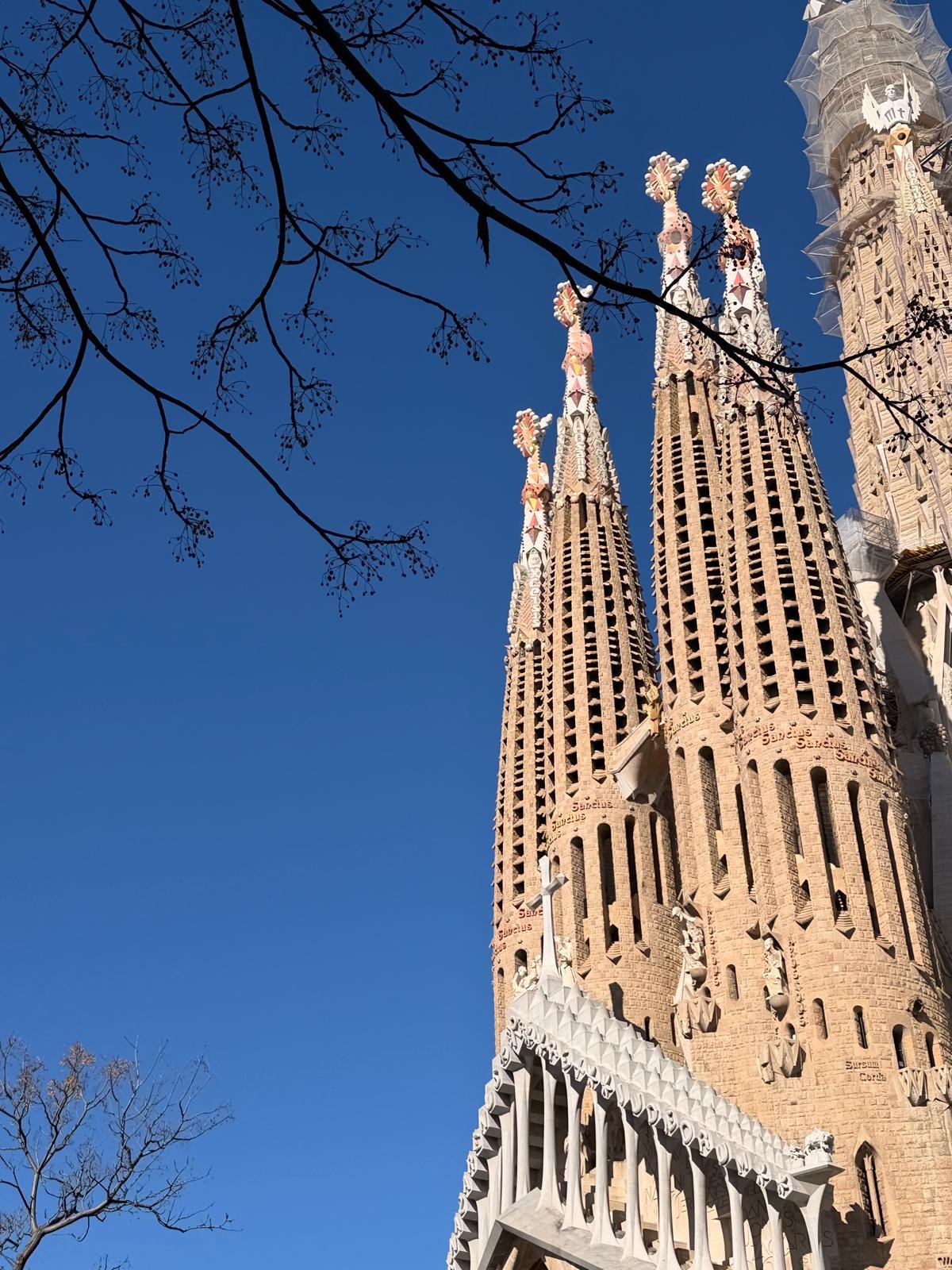
The Sagrada Família was begun in 1882 as a conventional neo-Gothic church. Antoni Gaudí took over the project a year later and redesigned it entirely, and he worked on it for the next forty-three years — the last dozen of them exclusively — until he was killed by a tram in 1926.
Our partner
Travel insurance · 5% off for our readers
Get a quoteHe knew he would not see it finished and designed it so that others could continue. Much of his original material was destroyed in 1936, and the work since has depended on surviving models, photographs and reconstruction, which is part of why the building has been argued over for a century.
Three facades tell the story of Christ: the Nativity front, largely finished in Gaudí’s lifetime and the most obviously his; the Passion front, stark and angular, carved much later by Josep Maria Subirachs to considerable controversy; and the Glory front, still incomplete.
The interior is the surprise. The columns branch like trees to carry the vaults, and the stained glass is graded by colour so that the light is cool on one side and warm on the other. It was consecrated as a basilica in 2010, while still a building site.
The completion date has been revised repeatedly and remains uncertain.
Nearby
- Barcelona — 2.4 km straight-line distance