
Where to stay near Park Güell
See the hotels and apartments available on Booking.com · This is an affiliate link with our partner. Europe by Giddo may earn a commission from a purchase made through it, at no extra cost to you.
Park Güell was not meant to be a park. Eusebi Güell, Gaudí’s patron, bought the hillside in 1900 intending to build an English-style garden suburb of sixty houses. It failed commercially — only two were ever built — and the family handed the site to the city in 1926, which opened it as a public park.
Our partner
Travel insurance · 5% off for our readers
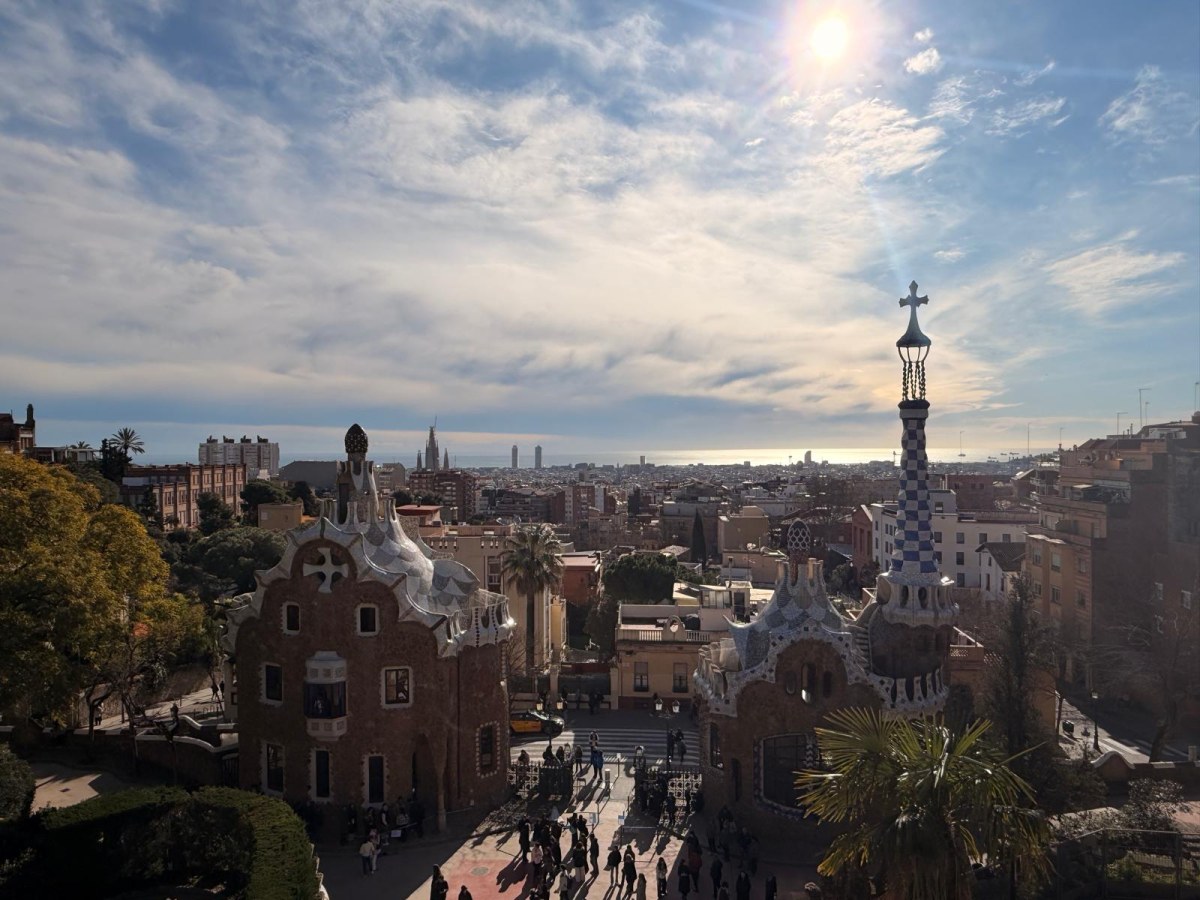
Get a quoteWhat had been built was the infrastructure, and that is what visitors see: the entrance pavilions with their roofs like something out of a fairy tale, the mosaic salamander on the steps, the hall of columns that was to have been the estate market, and above it a great open terrace edged by a serpentine bench.
The bench is covered in trencadís, mosaic made from broken tile, much of it industrial waste and discarded crockery. Josep Maria Jujol worked closely with Gaudí on it.
The viaducts that carry the paths around the hillside are built from stone quarried on site, with columns that lean to follow the line of thrust, so that they look almost geological rather than constructed.
The monumental core requires a timed ticket; the wooded parkland around it is free. Gaudí lived in one of the two completed houses for two decades, and it is now a museum.
Nearby
- Barcelona — 4.1 km straight-line distance