
Suggested itinerary · 6 days
Six days in Norway
Oslo to Bergen in six days: Vigeland’s sculptures, the Holmenkollen ski jump, a stave church on the old road west, the railway down to Flåm, and a day out to Trolltunga.
Where to stay in Oslo
See the hotels and apartments available on Booking.com · This is an affiliate link with our partner. Europe by Giddo may earn a commission from a purchase made through it, at no extra cost to you.
This is a one-way week, six days rather than seven, that starts in Oslo and finishes in Bergen — broadly the shape of the classic crossing between Norway’s two largest cities, done at a slower pace than the standard day trip.
Our partner
Travel insurance · 5% off for our readers
Get a quoteThe pattern is simple. Two days in and around Oslo, a day crossing west on the old road to the Sognefjord, a day down to the coast by rail, and two days based in Bergen, one of them a long day out into Hardanger.
One caution: the walk to Trolltunga on day six is long, needs a full day out and back with a real climb, and its season is short. Outside the summer months the route needs a guide and winter equipment; if that is not the trip you want, Bergen itself — Fløyen, the fish market, Troldhaugen — is easily a full day on its own.
Day by day
-
Day 1
Oslo
A capital between fjord and forest, and an afternoon in one sculptor’s park.
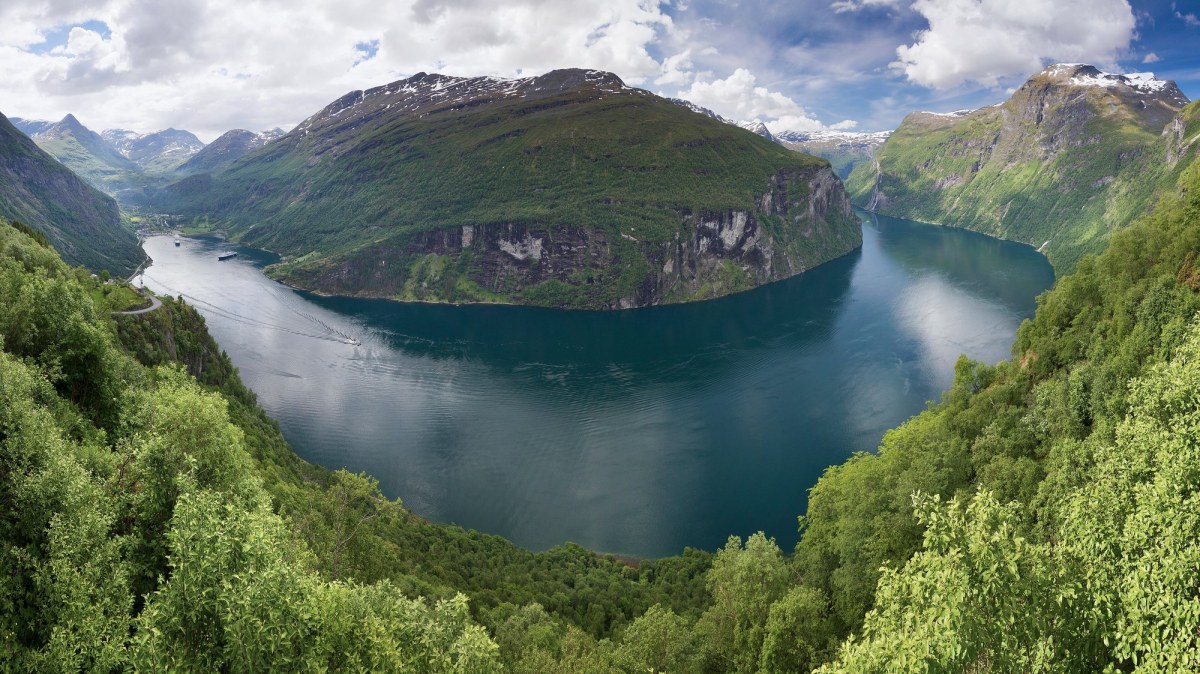
The Geirangerfjord seen from Ørnesvingen, Norway Credit: Europe by Giddo Oslo sits at the head of its fjord with the Nordmarka forest immediately behind it, and its waterfront has been rebuilt over the last two decades around the Opera House, the Munch museum and the National Museum. Give the harbour a slow morning before moving inland.
Frogner Park holds the Vigeland Sculpture Park, the life’s work of one sculptor laid out along a single axis from the gate to the granite Monolith at the top of the terrace. It is unlike any other sculpture park for that reason: one hand, one subject — the human body across a life — and no mythology anywhere in it. It costs nothing to get in and doubles as an ordinary city park, which keeps it as much a place people live in as a monument.
- Oslo The Opera House, the Munch and National museums sit together on the rebuilt harbourfront.
- Vigeland Sculpture Park The carved Monolith at the top of the terrace is the piece to build a visit around.
-
Day 2
Above the city
Up into the forest, to the ski jump the whole city can see.
The Geirangerfjord seen from Ørnesvingen, Norway Credit: Europe by Giddo Holmenkollen stands at the edge of the Nordmarka on the hill above Oslo, reached by a metro line that climbs straight out of the centre to it. There has been a ski jump on this spot since 1892, rebuilt many times since; the present steel tower dates from 2010 and is a fixture on the skyline from a good part of the city below.
The Ski Museum is cut into the hill beneath the landing slope and covers several thousand years of skiing, including equipment carried on the polar expeditions of Nansen and Amundsen. The Nordmarka trails begin immediately behind the jump, floodlit through the winter and used by ordinary residents on ordinary evenings.
- Holmenkollen A lift runs to the top of the tower for the view over the city and the fjord, and the Ski Museum sits underneath it.
-
Day 3
Into the fjord country
West on the old road, past a stave church, to the head of a narrow fjord.
The Geirangerfjord seen from Ørnesvingen, Norway Credit: Europe by Giddo The old road west out of eastern Norway toward the Sognefjord passes through Lærdal, where Borgund stave church stands. It is the best-preserved of the stave churches that survive: vertical timber staves raised in the late twelfth century and never substantially rebuilt, with tiered shingled roofs, a gallery running the whole way round, and dragon heads on the gables that look back to the ships.
The road, for this trip, ends at Flåm, a village at the head of the Aurlandsfjord shut in by mountains on every side. It is a small place that takes a very large number of visitors in season and very few out of it.
- Borgund Stave Church There is no electricity or heating inside; a visitor centre across the road explains how it was built.
- Flåm A working village that meets the standard route between Oslo and Bergen at exactly this point.
-
Day 4
The railway down, and on to Bergen
One of the world’s steepest adhesion railways, then on to the Hanseatic port.
The Geirangerfjord seen from Ørnesvingen, Norway Credit: Europe by Giddo The Flåm Railway climbs from the village up to Myrdal on the Bergen line, on ordinary wheels and ordinary rails with no rack, through a run of tunnels including one that spirals inside the mountain to gain height. It stops partway up at the Kjosfossen waterfall so passengers can get out and look at it.
This train and the Bergen line above it are the backbone of the standard route between Oslo and Bergen, and Flåm is where they meet. From Myrdal the line carries on west to the coast and to Bergen itself, a Hanseatic port arranged in a bowl of seven mountains and the base for the next two nights.
- Flåm Railway The descent uses five separate braking systems, on rolling stock still kept in its old green livery.
- Bergen Arrival point for the second half of the trip, and the base for the next two days.
-
Day 5
The wharf
Bergen’s Hanseatic waterfront, burned and rebuilt on the same plan for six centuries.
The Geirangerfjord seen from Ørnesvingen, Norway Credit: Europe by Giddo Bryggen is the row of narrow, gabled buildings along the harbour that once held one of the Hanseatic League’s four foreign trading offices, running the stockfish trade south from the Arctic from the fourteenth century on. It has burned down repeatedly — most recently in 1955 — and been rebuilt each time on the same foundations and to the same plan, which is the reason for its World Heritage listing.
Go into the passages behind the street-facing buildings rather than stopping at the front: they are dark, narrow, and lean at odd angles built up over centuries. The Hanseatic Museum, in the old merchant’s house at Finnegården, keeps the traders’ box beds and offices much as they were; Bryggens Museum next door is built over the excavated medieval wharf beneath the present one.
- Bryggen The Fløibanen funicular up Fløyen and the harbour fish market are both on this same stretch of waterfront.
-
Day 6
Hardanger, and back to Bergen
A long day out to a rock shelf above a lake, then back to the wharf for the last night.
The Geirangerfjord seen from Ørnesvingen, Norway Credit: Europe by Giddo Hardanger is the fjord country south-east of Bergen, and its best-known sight is Trolltunga, a thin, flat slab of rock projecting from a cliff high above Ringedalsvatnet with nothing beneath it, left behind when the glacier that filled the valley plucked away the rock underneath along a natural joint.
The walk from Skjeggedal is long: a full day out and back with a substantial climb, and mountain rescue in the area has repeatedly warned people not to underestimate it. There is no railing on the rock and no supervision at the top. Return to Bergen for the night, and treat the fish market and Fløyen as the fallback plan if the season or the weather rules the walk out.
- Trolltunga The season is short; outside it, the route needs a guide and winter equipment.
- Bergen The trip ends here, back at the harbour where its second half began.

None of these stops has a location on file yet, so this itinerary is not on the map.