
Suggested itinerary · 7 days
Seven days in Italy
Rome to Venice in a week: the ancient centre and the Vatican, Naples and Pompeii, the Amalfi Coast, Florence and Siena, and the tower at Pisa before the road turns north-east to the lagoon.
Where to stay in Rome
See the hotels and apartments available on Booking.com · This is an affiliate link with our partner. Europe by Giddo may earn a commission from a purchase made through it, at no extra cost to you.
This is a one-way week that starts in Rome and finishes in Venice, moving south to Naples and the Amalfi Coast before turning north through Tuscany and the plain towards the lagoon. Most of the route works by train; a car only earns its keep on the coast road south of Naples.
Our partner
Travel insurance · 5% off for our readers
Get a quoteThe shape is simple: two days in Rome, two days south around the bay of Naples, two in and around Tuscany, and a last day travelling to the water. Nothing here is rushed except day six, which asks a lot of a single day.
One practical note before setting out: the Uffizi Gallery in Florence and the climb inside St Peter’s dome both run on timed tickets with heavy demand, so booking ahead for both is the difference between walking straight in and losing a morning to a queue.
Day by day
-
Day 1
Rome
Arrive, and start with the amphitheatre that gave every stadium since its shape.
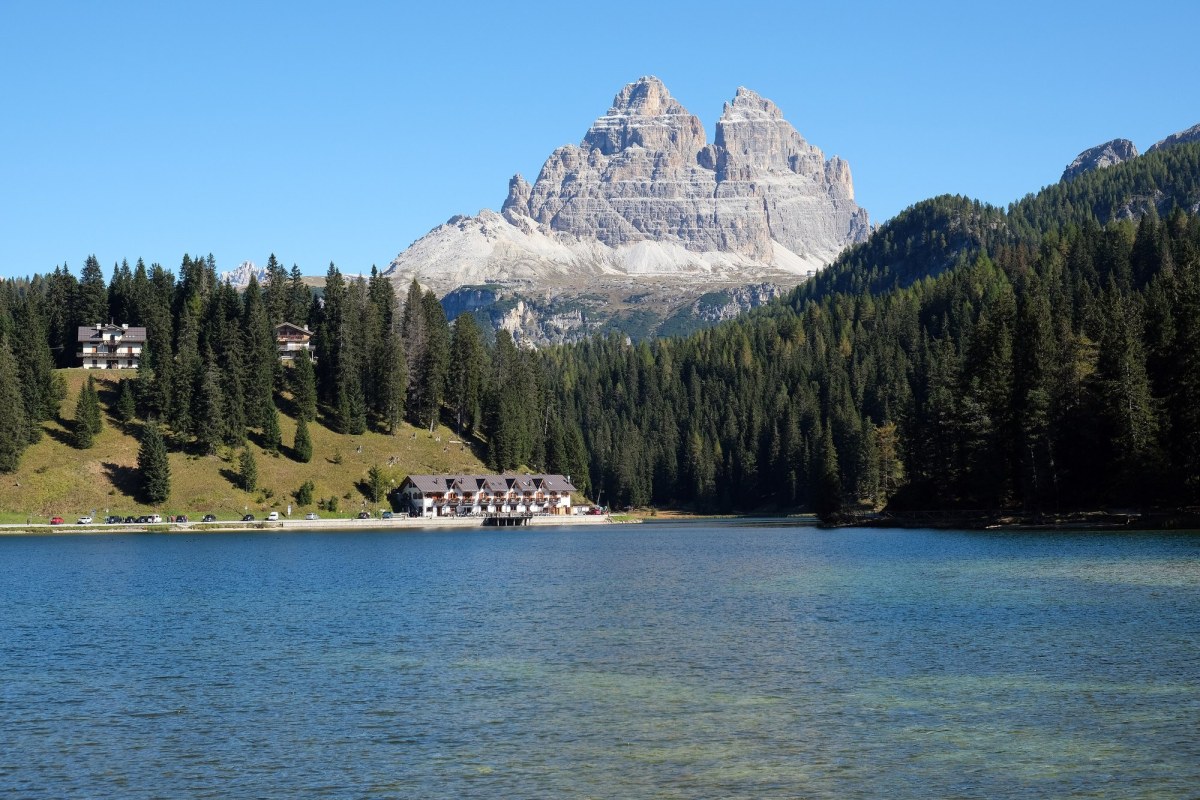
The Tre Cime di Lavaredo above Lake Misurina in the Dolomites, Italy Credit: Europe by Giddo Rome’s ancient centre was never turned into a museum quarter, so the Forum, the Colosseum and the Pantheon stand surrounded by traffic, offices and apartments rather than set apart from them. Settling into a neighbourhood near the centre — Trastevere, Monti or the Jewish Ghetto all have their own character — is a better start than trying to see everything on the first afternoon.
The Colosseum is the obvious first stop: opened in AD 80, it is the direct ancestor of every stadium built since, and the ticket normally also covers the Roman Forum and the Palatine Hill beside it. Go early or late in the day, since both the crowds and, in summer, the heat build through the middle hours.
- Rome Choose a neighbourhood to stay in — Trastevere, Monti and the Jewish Ghetto each have their own character — since the ancient centre is still a lived-in part of the city rather than a roped-off one.
- Colosseum The ticket normally also covers the Roman Forum and the Palatine Hill beside it, and the two together take longer to see than the amphitheatre itself.
-
Day 2
The Pantheon and the Vatican
A dome open to the sky, and a basilica across the river built over more than a century.
The Tre Cime di Lavaredo above Lake Misurina in the Dolomites, Italy Credit: Europe by Giddo The Pantheon survives in something close to its original state because it was handed to the church in the seventh century and has been in continuous use ever since. Its dome is still the largest unreinforced concrete dome in the world, and the oculus at its centre is genuinely open — there is no glass, and rain falls straight through onto a floor built to drain it.
Vatican City is a separate state, entirely walkable from the historic centre once the Tiber is crossed. St Peter’s Basilica took more than a century to build, with Bramante, Michelangelo, Maderno and Bernini each shaping part of it, and Michelangelo’s dome can be climbed by lift and then on foot up a narrowing stair. A dress code covering shoulders and knees is enforced at the door.
- Pantheon Entry is free, and standing under the open oculus during a shower of rain is one of the more memorable things on offer in the city.
- St Peter's Basilica Security queues can be long and a dress code covering shoulders and knees is enforced, so plan the visit with time to spare.
-
Day 3
South to Naples and Pompeii
The Greek grid of a loud, dense city, then a Roman town buried whole by Vesuvius.
The Tre Cime di Lavaredo above Lake Misurina in the Dolomites, Italy Credit: Europe by Giddo Naples was founded by Greeks and their street grid is still the plan of the historic centre — three long, straight decumani with narrow lanes between them. The National Archaeological Museum holds the mosaics and everyday objects carried out of Pompeii and Herculaneum, and seeing it before the site itself makes much more sense of what is left standing there.
Pompeii is a whole Roman town rather than a set of monuments: streets with wheel-ruts, shops with counters, bakeries with ovens, and painted rooms in private houses, all buried under ash and pumice in AD 79 and gradually dug out since the eighteenth century. It takes most of a day to walk properly and there is very little shade.
-
Day 4
The Amalfi Coast
A cliff road between Sorrento and Salerno, and a small town wedged into the ravine that gave the coast its name.
The Tre Cime di Lavaredo above Lake Misurina in the Dolomites, Italy Credit: Europe by Giddo The Amalfi Coast road, the SS163, was cut into the cliff face in the nineteenth century and runs the length of the Sorrentine peninsula’s southern side, with villages stacked above and below it. It is narrow, heavily bent and congested in summer, and ferries between the towns are usually the calmer way to see it, since the coast was really designed to be approached from the water.
Amalfi itself is smaller than its fame suggests: a town built into a narrow valley where it meets the sea, once the seat of one of medieval Italy’s maritime republics. The cathedral stands at the top of a long flight of steps in the main square, its striped, patterned façade showing the same Arab-Norman influence found further south.
- Amalfi Coast Consider arriving by ferry from Naples or Salerno rather than driving; the coast road is narrow and slow in summer.
- Amalfi Small enough to see in a day but worth a night, once the day visitors have left; the old paper mills up the valley are a quiet detour inland.
-
Day 5
North to Florence
A long day north out of Campania, into a city small enough to cross on foot in twenty minutes.
The Tre Cime di Lavaredo above Lake Misurina in the Dolomites, Italy Credit: Europe by Giddo Florence’s historic centre is compact enough to cross on foot in about twenty minutes, and inside that small area sit the Duomo, the Bargello, the Palazzo Pitti and the Uffizi. The density is what makes the city feel overwhelming rather than the distances involved.
The Uffizi holds the core of the Medici collection in what was originally a sixteenth-century office building, arranged in something close to chronological order — one of the few museums where a visitor can watch painting change style room by room, from gold-ground panels through to Botticelli, Leonardo and Caravaggio.
- Florence The historic centre is closed to most traffic and can be crossed on foot in about twenty minutes.
- Uffizi Gallery Tickets are timed and demand is high; booking a slot in advance is the difference between an hour in a queue and walking straight in.
-
Day 6
Siena, and the tower at Pisa
Two more faces of Tuscany — a medieval city preserved by decline, and a bell tower that leans by accident — before the road turns towards Venice.
The Tre Cime di Lavaredo above Lake Misurina in the Dolomites, Italy Credit: Europe by Giddo Siena stopped growing after plague and defeat ended its rivalry with Florence in the fourteenth century, which is why its medieval centre survives largely intact. The Piazza del Campo, a shell-shaped square sloping down to the town hall, is the middle of everything, and the black-and-white banded cathedral beside it stands next to the unfinished wall of an even larger one that the plague stopped before it could be built.
Pisa’s bell tower began to lean before its third storey was finished, because the ground under one side is softer than the other. Work paused for the best part of a century, and when it resumed the upper floors were built at a corrected angle, which is why the tower curves rather than simply tilts. A stabilisation project in the 1990s reduced the lean, and it is now considered stable.
- Siena The old town is hilly, walled and largely closed to cars; most people arrive by bus from Florence.
- Leaning Tower of Pisa The tower shares its lawn with the cathedral and a round baptistery — worth at least as much time as the tower itself.
-
Day 7
To Venice
The road ends where the streets turn to water and the main thoroughfare is a canal.
The Tre Cime di Lavaredo above Lake Misurina in the Dolomites, Italy Credit: Europe by Giddo Venice is built on more than a hundred small islands across a lagoon, on foundations of wooden piles driven into the mud, and there are no cars anywhere in the historic city. Everything moves on foot or by boat, and the walking involves a considerable number of bridges and steps.
The Grand Canal is the main thoroughfare, curving through the middle of the city in a reversed S and lined with several hundred palace façades built to be seen from the water rather than the street behind them. The number 1 vaporetto runs its full length and stops at every landing, at a fraction of the cost of a gondola.
- Venice There are no cars in the historic city; getting lost on foot away from the routes between the station, the Rialto and St Mark’s is the best way to see how residents actually live.
- Grand Canal Ride the number 1 vaporetto end to end, ideally in the late afternoon, for the cheapest good view of the palaces along it.

None of these stops has a location on file yet, so this itinerary is not on the map.