
Suggested itinerary · 6 days
Six days in Bulgaria
Sofia to the Black Sea coast in a week: a mountain monastery, a Roman theatre, a rose valley of Thracian tombs, a medieval capital in a gorge, and a stone town on a rock in the sea.
Where to stay in Sofia
See the hotels and apartments available on Booking.com · This is an affiliate link with our partner. Europe by Giddo may earn a commission from a purchase made through it, at no extra cost to you.
This is a one-way week that starts in the capital and finishes on the coast, crossing the country from its mountain west to its Black Sea shore. It works well with a hire car, though the main towns along the route are also linked by road and rail.
Our partner
Travel insurance · 5% off for our readers
Get a quoteThe shape follows the geography rather than fighting it: south-west out of Sofia to Boyana and Rila Monastery, south to the Thracian plain and Plovdiv, north over the Sredna Gora into the Valley of the Roses, east through the Balkan Range to the medieval capital at Veliko Tarnovo, and on to the sea at Nessebar. Six days covers the shape of the country without rushing any one place.
Day by day
-
Day 1
Sofia
A capital built over a Roman city, with a mountain rising directly behind it.
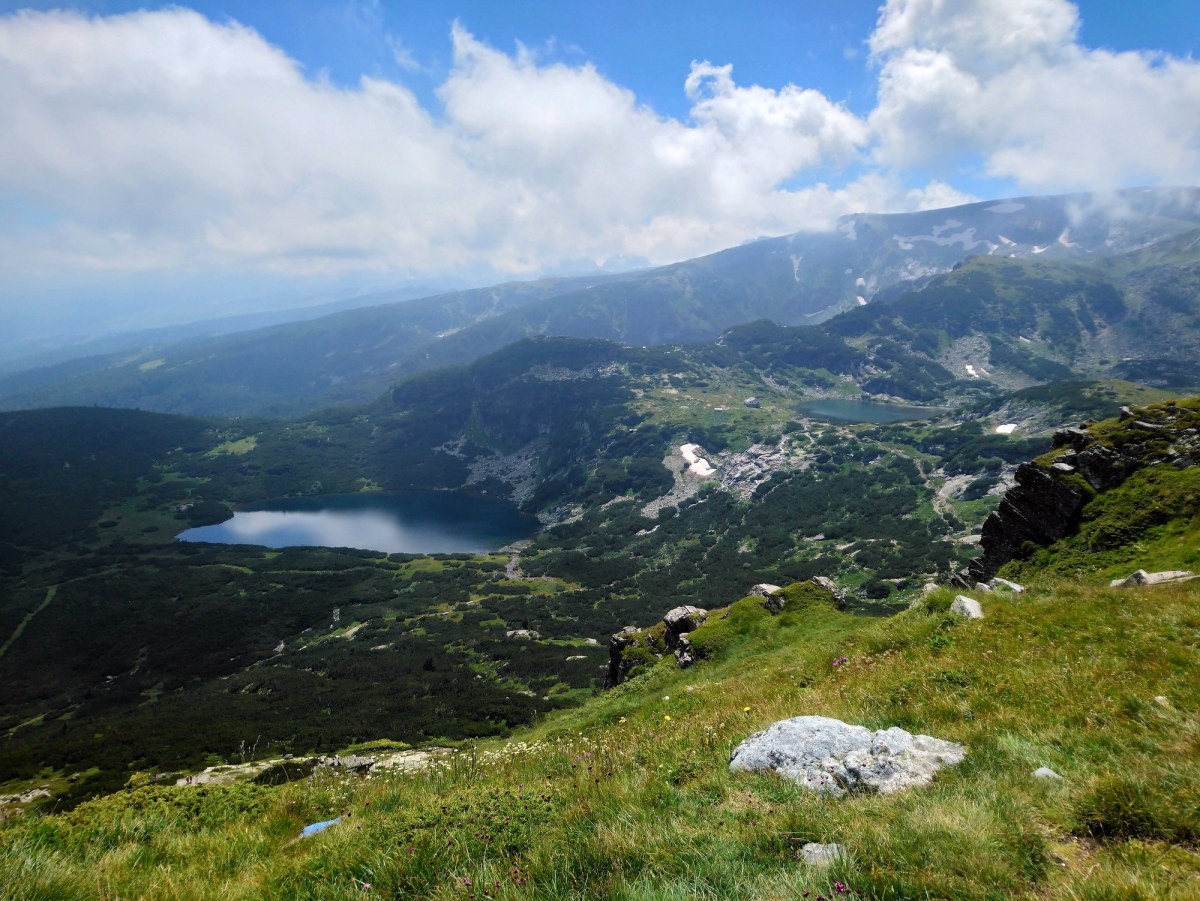
The Rila Lakes in the Rila Mountains, Bulgaria Credit: Europe by Giddo Sofia is an old capital that does not make a show of its age. Serdica, the Roman town underneath it, was turned up in quantity when the metro was dug, and a section of it is now walked through between platforms rather than kept behind glass. Above ground the centre layers a Roman rotunda, an Ottoman mosque, a synagogue and a Russian church within a few streets of each other.
Alexander Nevsky Cathedral, gold-domed and built as a memorial to the soldiers of the war that ended Ottoman rule, is the landmark everyone photographs, and its crypt holds the country’s national collection of icons. Vitosha rises directly behind the city and is reachable on public transport, which is worth knowing for the following morning.
- Sofia The Roman remains of Serdica are walked through beneath the modern streets and metro, between the mosque that now holds the archaeological museum and the yellow-paved boulevards of the old kingdom centre.
- Alexander Nevsky Cathedral A neo-Byzantine memorial cathedral with a gold-plated dome and a crypt holding the national collection of icons.
-
Day 2
Boyana and Rila Monastery
A day out from the capital to a small painted church and the country’s greatest monastery.
The Rila Lakes in the Rila Mountains, Bulgaria Credit: Europe by Giddo Boyana Church sits at the edge of Sofia under Vitosha, small and plain from outside and easy to miss. Inside, the paintings added in 1259 are the reason it is a World Heritage site: individual, recognisable faces rather than the flatter conventions of the period, including donor portraits of the sebastocrator Kaloyan and his wife Desislava. Visits are in short controlled groups because the church is so small.
Rila Monastery, further into the mountains, is generally described as the country’s most important single monument, and its courtyard is unlike anything else in Orthodox architecture: four storeys of black-and-white striped arcades running the full circuit, around a church whose outer porch is painted floor to ceiling in vivid scenes. Almost everything standing dates from a nineteenth-century rebuilding after a fire, except the fourteenth-century Hrelyo Tower in the courtyard, the oldest building on the site.
- Boyana Church A small church at the edge of Sofia, a World Heritage site for the individually painted faces added to its walls in 1259.
- Rila Monastery The country’s largest monastery, its striped courtyard built mostly in the nineteenth century around the surviving fourteenth-century Hrelyo Tower.
-
Day 3
South to Plovdiv
Cross the Thracian plain to a city built across seven hills.
The Rila Lakes in the Rila Mountains, Bulgaria Credit: Europe by Giddo The road south from Sofia crosses the Upper Thracian Plain, farmed continuously since long before Rome and still scattered with Thracian burial mounds. Plovdiv, at the far side, is generally described as among the oldest continuously inhabited cities in Europe, and has answered to Thracian, Macedonian, Roman, Ottoman and Bulgarian names in turn.
The Roman theatre, buried and forgotten until a 1970s landslide exposed it, has been restored well enough to hold opera and concerts rather than just tour groups. Above it the old town climbs the hills in painted, timber-fronted revival houses, up to the viewpoint at Nebet Tepe; below it, the former craftsmen’s quarter of Kapana has been remade into the city’s arts and eating district.
- Plovdiv A city built across seven hills, with a revival-period old town of painted, timber-fronted merchant houses considered the best preserved in the country.
- Roman Theatre of Plovdiv A second-century theatre uncovered by a landslide in the 1970s and now used for opera, concerts and a summer festival.
-
Day 4
Into the Valley of the Roses
North over the hills to the rose valley and a painted Thracian tomb.
The Rila Lakes in the Rila Mountains, Bulgaria Credit: Europe by Giddo North of Plovdiv the road climbs over the Sredna Gora into the sheltered valley between it and the Balkan Range where the Damask rose has been grown for oil since the Ottoman period. Kazanlak, the valley’s main town, times its Rose Festival to the harvest, which is picked by hand before dawn through May and June.
The town is also the gateway to the Valley of the Thracian Rulers, where hundreds of burial mounds stand in the surrounding fields. The painted tomb on the edge of Kazanlak is sealed for conservation, and a full-size replica, copied in detail, is what visitors actually enter — the same arrangement used at other fragile painted sites elsewhere in the world.
- Kazanlak The centre of Bulgaria’s rose-oil valley, and the gateway to the Thracian burial mounds in the surrounding fields.
- Thracian Tomb of Kazanlak A fourth-century BC painted tomb, sealed for conservation, entered today through a detailed full-size replica beside it.
-
Day 5
Veliko Tarnovo
A medieval capital built in tiers around a fortress hill in a river gorge.
The Rila Lakes in the Rila Mountains, Bulgaria Credit: Europe by Giddo East through the Balkan Range, the road passes below Shipka before dropping into Veliko Tarnovo, the capital of the second Bulgarian state. The Yantra river loops back on itself here in a deep gorge, and the town is built up the slopes in tiers, one street’s roofline forming the next street’s foundations.
Tsarevets, the fortress hill inside one of the loops, holds the walls, the palace foundations and the patriarchal church at the summit, its interior painted in a deliberately modern style in the 1980s that is still argued over. Samovodska Charshia, the old craft street below, still has workshops that work rather than just sell.
- Veliko Tarnovo The medieval capital built in tiers up the sides of a gorge cut by the Yantra river.
- Tsarevets Fortress The fortress hill of the old capital, approached along a narrow rock neck, with a patriarchal church painted in a stark modern style in the 1980s.
-
Day 6
East to the coast, and Nessebar
Finish the week on a small stone town on a rock in the sea.
The Rila Lakes in the Rila Mountains, Bulgaria Credit: Europe by Giddo The last leg runs east to the Black Sea, where the coast divides into a broken, cliff-edged north and a southern shore of long sandy bays and old stone towns. Nessebar sits on a small rocky peninsula joined to the mainland by a causeway, its old town listed as a whole rather than building by building.
A town this size holds the remains of more than a dozen Byzantine churches, most of them roofless, their outer walls banded in brick and stone in patterns typical of the Byzantine provincial style. Above them, revival-period houses with overhanging timber upper floors line the lanes down to the old windmill on the causeway, which is the picture everyone leaves with.
- Nessebar A small stone town on a causeway-linked peninsula, busiest in the middle of the day and best walked early or late.
- Old Nessebar A World Heritage old town holding the remains of more than a dozen Byzantine churches built between the fifth and fourteenth centuries.

None of these stops has a location on file yet, so this itinerary is not on the map.