
Suggested itinerary · 6 days
Six days on the Turkish Riviera
A six-day loop from Antalya along the coast at Side and Manavgat to the Roman theatre at Aspendos, and back to Antalya's old town for the flight home.
Where to stay in Türkiye
See the hotels and apartments available on Booking.com · This is an affiliate link with our partner. Europe by Giddo may earn a commission from a purchase made through it, at no extra cost to you.
This is a loop that starts and ends at Antalya, because that is where the airport is, and spends the days in between on the stretch of coast between Manavgat and Side. It keeps to a small number of fixed points rather than moving on every day: one coastal base, a couple of day trips inland, and Antalya itself kept for the last day rather than the first.
Our partner
Travel insurance · 5% off for our readers
Get a quoteThe shape follows the coast's own geography. The Taurus mountains run close behind the whole strip, which is why the rivers here stay cold and fast even in summer heat, and why Aspendos and Antalya both lie generally to the west of the Side and Manavgat coast rather than further along it. Six days is enough to see the coast's ancient cities without spending every day on the road.
Day by day
-
Day 1
Antalya, and the road east
Land at Antalya and travel along the coast to the Side and Manavgat stretch, saving the city itself for the return.
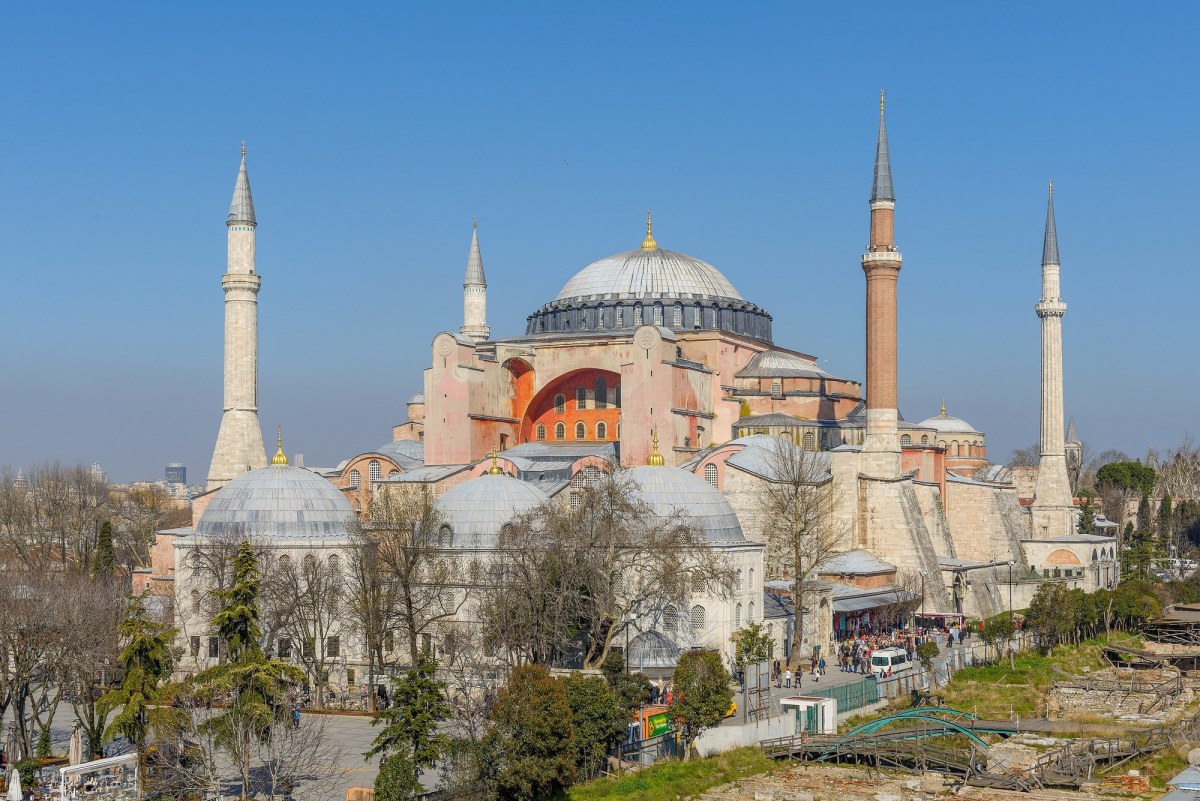
The Hagia Sophia in Istanbul, Türkiye Credit: Europe by Giddo Antalya is the airport for this whole coast, and most weeks here begin by passing straight through it: the city is west, the resort strip is east, and the drive out follows the narrow plain between the Taurus mountains and the sea that shapes everything on this trip.
There is no need to stop in the old town yet — Kaleiçi and Hadrian's Gate are worth a full day on their own, and this route keeps them for the last day, on the way back to the airport.
- Antalya The city of the coast and its airport, with its walled old town saved for the last day of this route rather than the first.
-
Day 2
Side, on its peninsula
Settle on the coast at Side, the resort town built in and around a Roman port city.
The Hagia Sophia in Istanbul, Türkiye Credit: Europe by Giddo Side sits on a small peninsula east of Antalya, on the stretch of coast between Manavgat and the sea that this route uses as its base for the next few days. It is an unusual place to arrive: the main street into the old quarter runs between standing Roman columns, and ruins turn up in gardens and beside the road as if nobody had thought to move them.
Beaches run along both sides of the peninsula, so there is a straightforward choice between the busier east beach and the rockier west beach nearer the ruins. Either way, the ancient city at the point is close enough to see properly tomorrow.
- Side A resort built inside an ancient port city, with beaches on both sides of the peninsula.
-
Day 3
Side's ancient city and the temple at sunset
Walk the ruins of Roman Side by day and watch the sun go down through the columns of the Temple of Apollo.
The Hagia Sophia in Istanbul, Türkiye Credit: Europe by Giddo Side's ancient city is largest at its theatre, built up on vaulted substructures because the ground here is flat rather than dug into a hillside — part of why the outer wall has survived as well as it has. Around it are the agora, a colonnaded street, and baths that now hold the museum, with a monumental gate marking the line of the old walls.
Save the point of the peninsula for the end of the day. The columns of the Temple of Apollo stand re-erected right at the water's edge, with a Byzantine basilica built directly behind them out of the temples' own stone, and there is nothing behind the columns but the sea — which is why the whole town turns out to watch the sun go down through them.
- Side Ancient City The Roman theatre, the colonnaded street and the monumental gate of the port city the modern resort grew up inside.
- Temple of Apollo, Side Re-erected columns on the point, with the ruins of a neighbouring temple to Athena and a Byzantine basilica built from their stone.
-
Day 4
The river and the waterfall at Manavgat
Head inland to the working town of Manavgat, its cold green river and the waterfall just above it.
The Hagia Sophia in Istanbul, Türkiye Credit: Europe by Giddo Manavgat is a short way inland from the coast, on the river of the same name, and it is where the resort strip does its shopping and its banking — a real Turkish town rather than a holiday one, with a weekly market worth timing a visit around. The river comes off the Taurus mountains fast and cold, and restaurants are built out over it on platforms for exactly that reason.
The waterfall lies just upstream of the town: not a tall fall but a wide one, with the whole river going over a single ledge into a pool below and tea gardens set right at the edge. Boats run from the town both down to the river mouth and up towards the gorge below the Oymapınar dam.
- Manavgat The working town behind the coast, on the cold green river that comes off the Taurus mountains.
- Manavgat Waterfall A wide, low fall where the whole river drops over one ledge, with tea gardens set at the edge of the pool.
-
Day 5
Aspendos
Drive inland to the best-preserved Roman theatre anywhere, still complete to the back wall of its stage.
The Hagia Sophia in Istanbul, Türkiye Credit: Europe by Giddo Aspendos stands inland in the Serik district, between the coast and Antalya, and its theatre is the reason to go: built in the second century under Marcus Aurelius by an architect named Zeno, and generally described as the best-preserved Roman theatre in the world. The seating banks are complete, the vaulted passages beneath them intact, and the stage building still stands to its full height at the back — which happened here because the Seljuks kept the building in use as a caravanserai rather than letting it fall.
The acoustics are worth testing from the orchestra, and the rest of the ancient city, including a long stretch of aqueduct, lies on the hill above the theatre.
- Aspendos Theatre The best-preserved Roman theatre anywhere, its stage wall still standing to full height and kept in use by the Seljuks as a caravanserai.
-
Day 6
Back to Antalya, and the flight home
Finish the route in Antalya's walled old town before flying out of the city that started the trip.
The Hagia Sophia in Istanbul, Türkiye Credit: Europe by Giddo The road back to Antalya closes the loop this route has followed since day one. Kaleiçi, the old town, sits inside its walls on the cliff above the ancient harbour, its lanes narrow and shaded and its Ottoman timber houses built directly over Roman and Byzantine foundations that surface here and there between them. Downhill always reaches the water.
Hadrian's Gate is the way in from the modern city: three marble arches put up for the emperor Hadrian's visit in the second century, later walled into the city's defences for a long stretch of its life, which is a large part of why it is still standing. It is a fitting last stop before the airport that opened this route.
- Kaleiçi Antalya's walled old town on the cliff above the ancient harbour, its Ottoman houses built over Roman and Byzantine foundations.
- Hadrian’s Gate A triple marble arch built for the emperor Hadrian's second-century visit, and the way into Kaleiçi from the modern city.

None of these stops has a location on file yet, so this itinerary is not on the map.