

Where to stay in Luxembourg
See the hotels and apartments available on Booking.com · This is an affiliate link with our partner. Europe by Giddo may earn a commission from a purchase made through it, at no extra cost to you.
Luxembourg is one of Europe's smallest states and one of its most quietly scenic. The whole country can be crossed in under two hours, which makes it an easy addition to a trip through Belgium, Germany or France rather than a destination that demands a fortnight.
Our partner
Travel insurance · 5% off for our readers
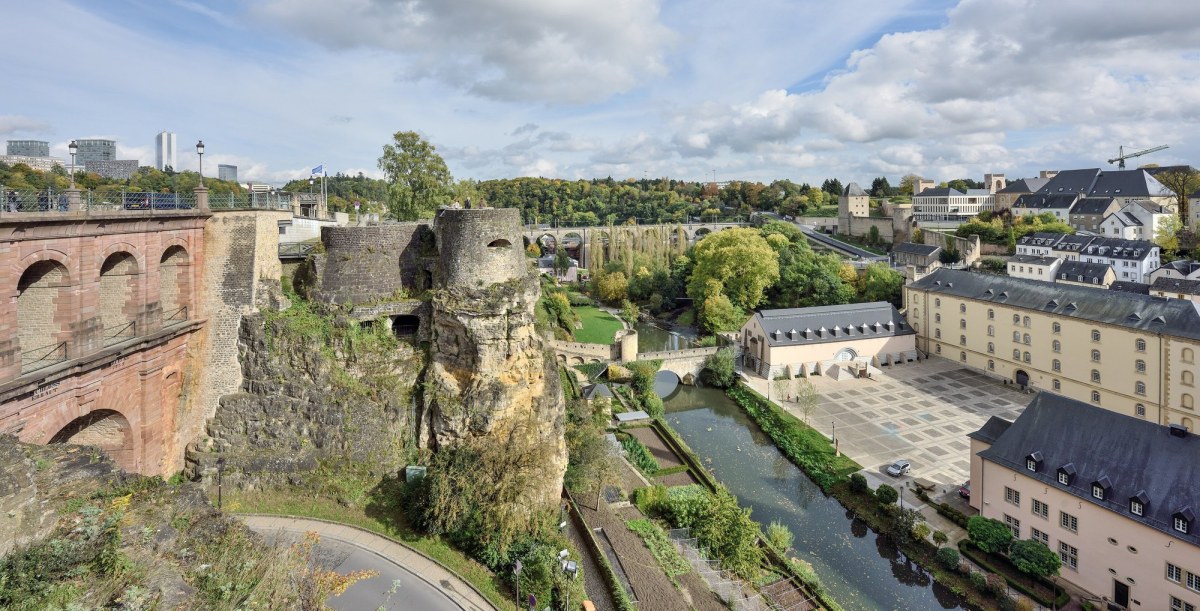
Get a quoteLuxembourg City is built on and around deep gorges cut by the Alzette and Pétrusse rivers. The old quarters and fortifications are a World Heritage site, and the Bock casemates — tunnels cut into the rock beneath the old fortress — run for kilometres. The Chemin de la Corniche walk along the ramparts has been called the most beautiful balcony in Europe.
North of the capital, the Ardennes region is forested and hilly, with the castles of Vianden, Bourscheid and Clervaux. Vianden's restored hilltop castle above a river town is the country's set piece. Esch-sur-Sûre sits in a tight loop of river below its own ruin.
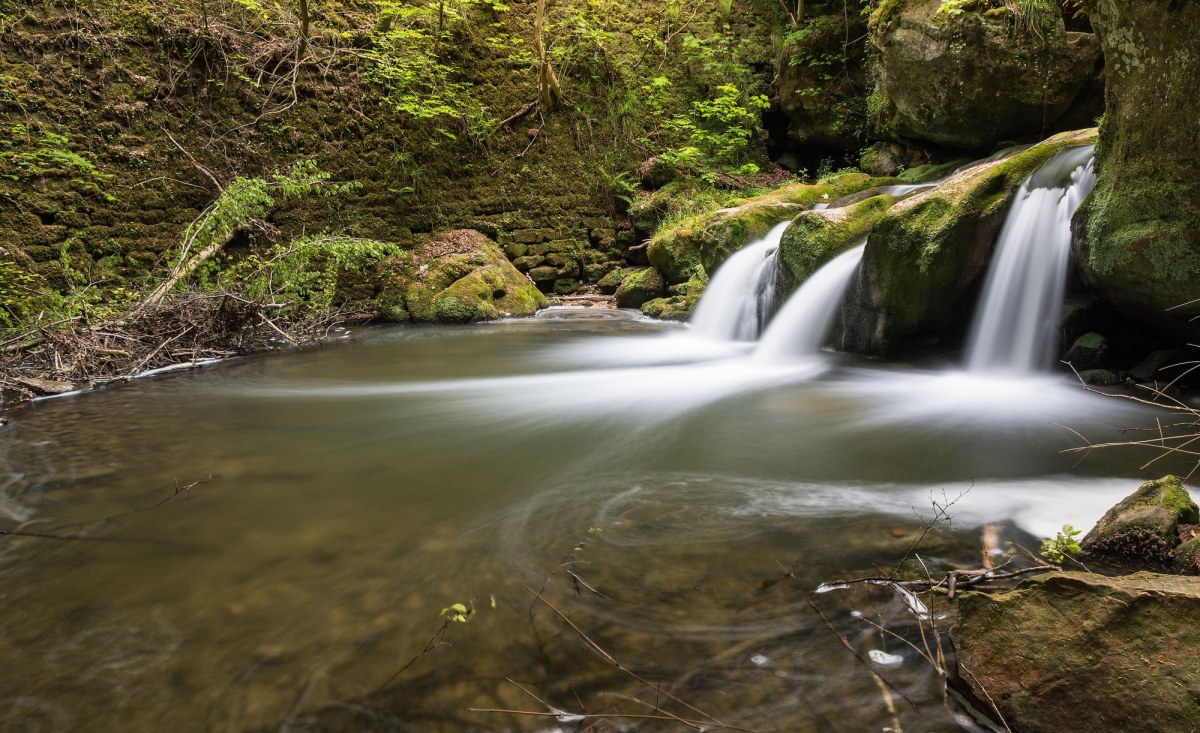
The east follows the Moselle, which forms the German border and is terraced with vineyards producing crisp white wines and sparkling crémant. The Mullerthal region — often called Little Switzerland — is a maze of sandstone rock formations, ravines and waymarked walking trails that is far wilder than the country's size suggests.
The south around Esch-sur-Alzette is the old iron-mining district, now reworked into cultural sites and nature reserves in the red rocks. The American military cemetery at Hamm, where General Patton is buried, lies just outside the capital.
Luxembourgish, French and German are all official, and most people move between them and English without effort. Public transport across the whole country is free to use, which is unique in Europe and makes exploring unusually simple.
Public transport across the entire country — trains, trams and buses — is free to use, which is unique in Europe and removes most of the friction from exploring. The capital's airport has good European connections, and Trier in Germany, Metz in France and the Belgian Ardennes are all under two hours away, so Luxembourg works as either a short stop or a quiet base for a wider region.
Common questions
- What is the capital of Luxembourg?
- The capital of Luxembourg is Luxembourg City.
- What currency is used in Luxembourg?
- Luxembourg uses the Euro (EUR).
- What language is spoken in Luxembourg?
- The official languages are Luxembourgish, French, German.
- When is the best time to visit Luxembourg?
- Temperate with mild summers and cool damp winters.
- Which side of the road do you drive on in Luxembourg?
- In Luxembourg you drive on the right.
- What plug sockets are used in Luxembourg?
- Luxembourg uses type C, F sockets.
- What is the dialling code for Luxembourg?
- The international dialling code for Luxembourg is +352.
Partner
Inside Luxembourg
Regions
4 to explore
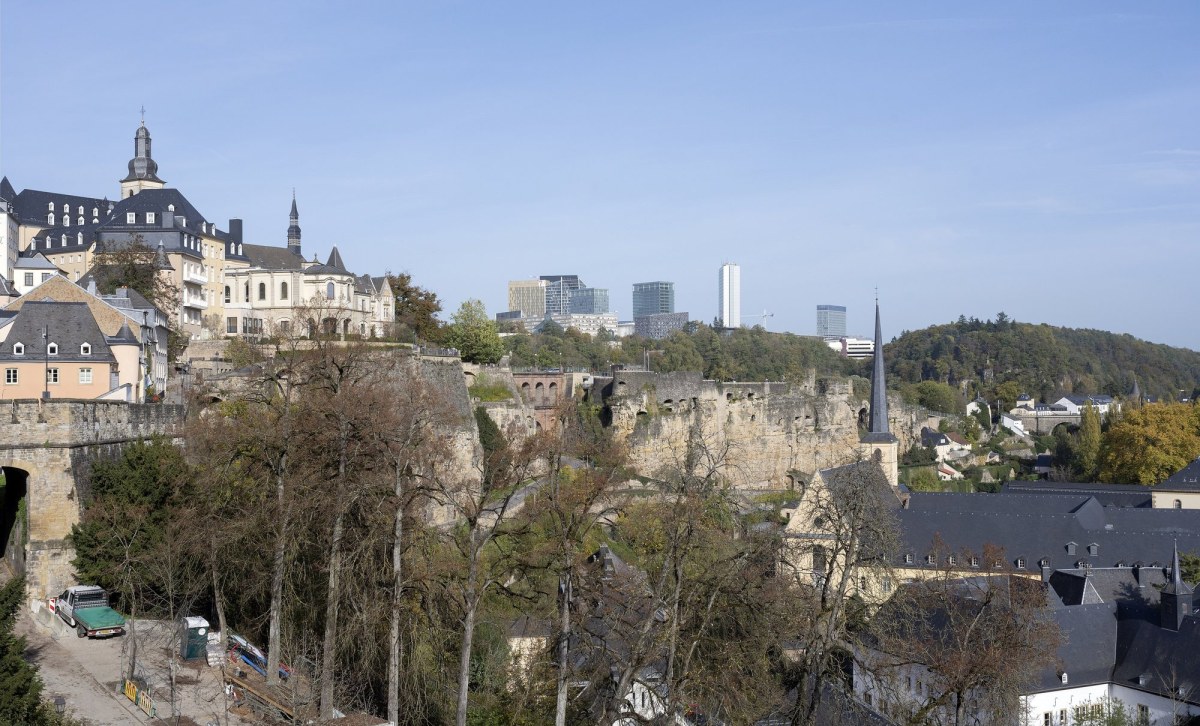
Luxembourg City and the South
Region
The capital on its gorges, and the old iron country of red rock below it.
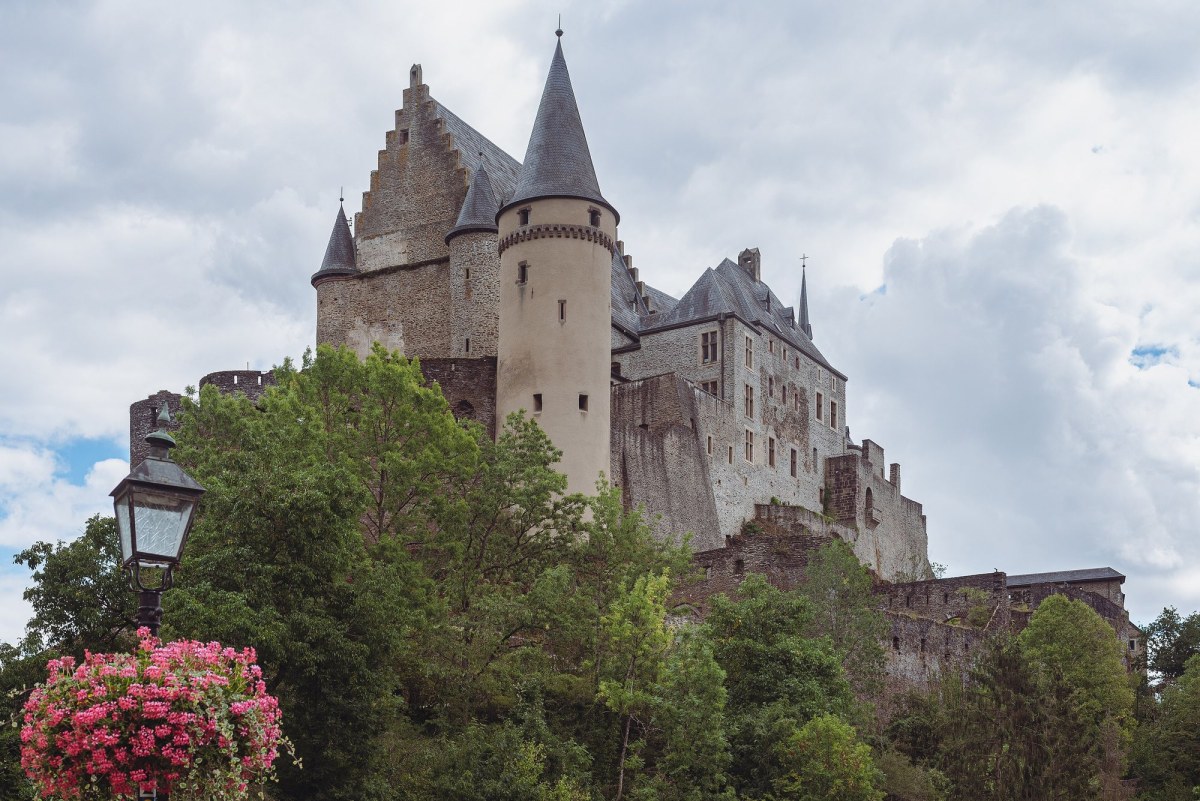
The Éislek
Region
The Ardennes of the north: high wooded plateau cut by deep river valleys, with castles in them.
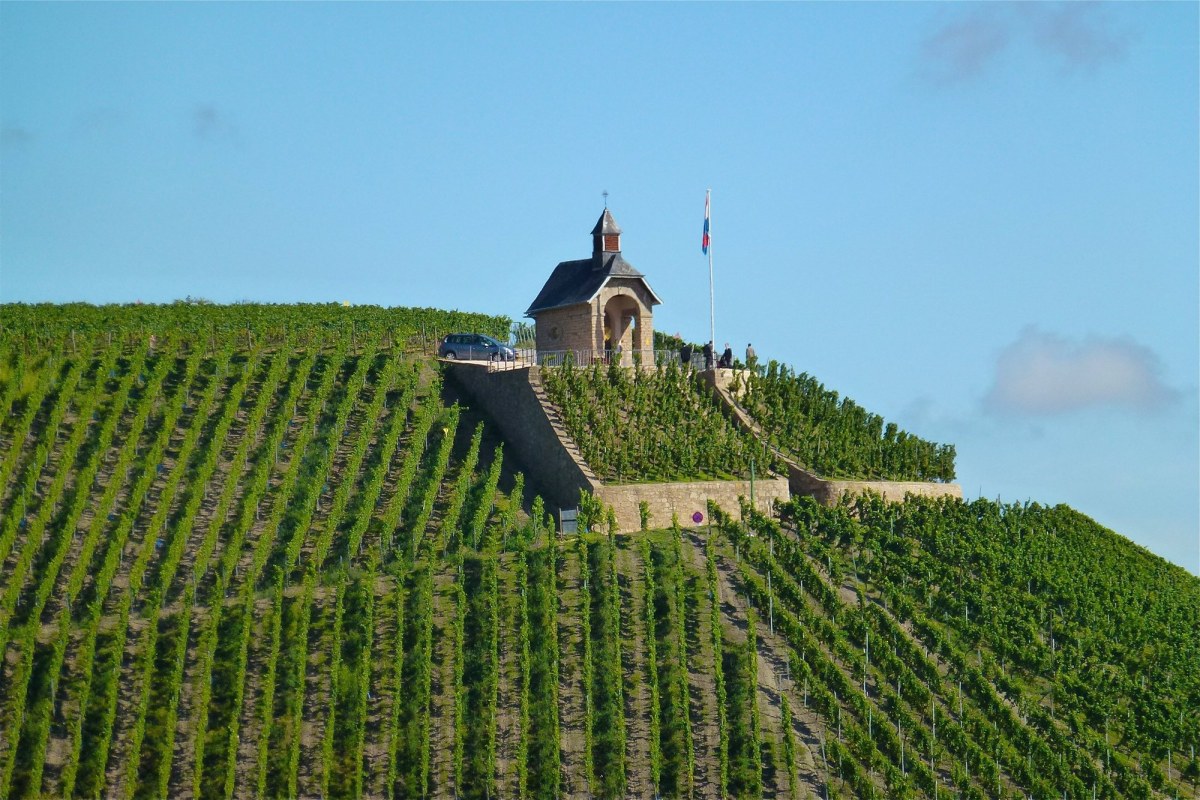
The Moselle Valley
Region
The wine river on the German border, terraced with vines and ending at Schengen.
Inside Luxembourg
Towns and cities
6 to explore
Clervaux
Town or city
A castle and an abbey in a tight loop of the Clerve, holding a famous photographic exhibition.
Echternach
Town or city
The oldest town in the country, built around an abbey, with a dancing procession through its streets.
Esch-sur-Alzette
Town or city
The second city, built on iron, with blast furnaces kept standing in the middle of a campus.
Luxembourg City
Town or city
A capital built on a rock above two gorges, with tunnels cut through the cliff beneath it.
Remich
Town or city
A wine town on the Moselle bank with a promenade, cellars and boats on the river.
Vianden
Town or city
A castle on a spur above a river loop, with a slate town under it and Victor Hugo’s house in it.
Inside Luxembourg
Landmarks
10 to explore
Belval Blast Furnaces
Landmark
Two steelworks furnaces kept standing while a university was built around them.
Chemin de la Corniche and the Grund
Landmark
A rampart walk called the most beautiful balcony in Europe, above an old quarter in the gorge.
Echternach Abbey and the Dancing Procession
Landmark
A seventh-century abbey and a procession that moves through the town in step, on UNESCO’s heritage list.
Grand Ducal Palace
Landmark
A Flemish Renaissance front on a narrow city street, with a sentry outside and no square in front of it.
Schengen
Landmark
A wine village where three countries meet, and where an agreement was signed on a boat.
The Bock Casemates
Landmark
A fortress tunnelled through the rock the city stands on, kept because it could not be demolished.
The Family of Man
Landmark
A photographic exhibition from 1955, given to Luxembourg by the man who made it, permanently installed.
The Mullerthal Trail
Landmark
A marked walking route through sandstone clefts, wooden stairs and moss-covered rock.
Upper Sûre Lake
Landmark
A reservoir in a drowned Ardennes valley, and the drinking water of the country.
Vianden Castle
Landmark
One of the great feudal residences of the region, stripped to a shell and rebuilt.
Plan the trip
Explore Luxembourg
Start with the regions, then the towns, then the sights worth a detour — each with its own page and its own pin on the map.
Start anywhere and follow the links. The guides and itineraries join these places into routes you can actually travel.
Credit: Europe by Giddo
Every place above is on this map. The lists on this page are the same content in the same order.