

Where to stay in Albania
See the hotels and apartments available on Booking.com · This is an affiliate link with our partner. Europe by Giddo may earn a commission from a purchase made through it, at no extra cost to you.
Albania was closed to the outside world for much of the twentieth century, and it shows in the best way: a Mediterranean coastline that was never built over, mountains that are still genuinely remote, and prices well below the rest of southern Europe.
Our partner
Travel insurance · 5% off for our readers
Get a quoteTirana, the capital, is small, colourful and changing fast. Skanderbeg Square, the Bunk'Art museums inside Cold War bunkers, the Dajti mountain cable car and a café culture that runs all day give it more than a night's worth.
Two Ottoman-era stone towns are World Heritage sites and both deserve time. Berat is the town of a thousand windows, tiers of white houses climbing to a castle that people still live inside. Gjirokastër is steeper and greyer, built of slate on a hillside above a valley, with a large fortress and a bazaar.
The Albanian Riviera runs along the Ionian coast from Vlorë south to Sarandë, past Himarë, Dhërmi and Ksamil's small islands, with the Llogara pass climbing over the mountains behind it. Butrint, near the Greek border, is an archaeological site layered from Greek through Roman to Venetian, set in a lagoon. Just inland, the Blue Eye spring rises from an unmeasured depth.
The north is the wildest part. The Accursed Mountains hold Theth and Valbona, connected by a walking pass that has become the country's classic hike, and the ferry up Lake Koman through a flooded gorge is one of the best boat journeys in Europe. Shkodër is the northern base.
The concrete bunkers built in their hundreds of thousands under the old regime are still scattered across fields and beaches. Albanian is unrelated to any other living language; Italian and English are widely spoken. Summer suits the coast, and the mountain passes open from roughly June to October.
Tirana has the main airport, and ferries cross from Italy to Durrës and Vlorë and from Corfu to Sarandë. Buses and shared minibuses called furgons cover the country informally but effectively; a car makes the Riviera and the north far easier. Albania combines naturally with Montenegro, Kosovo, North Macedonia and Greece on an overland Balkan route.
Common questions
- What is the capital of Albania?
- The capital of Albania is Tirana.
- What currency is used in Albania?
- Albania uses the Albanian lek (ALL).
- What language is spoken in Albania?
- The official language is Albanian.
- When is the best time to visit Albania?
- Hot dry summers on the coast; mild wet winters. The mountains hold snow into spring.
- Which side of the road do you drive on in Albania?
- In Albania you drive on the right.
- What plug sockets are used in Albania?
- Albania uses type C, F sockets.
- What is the dialling code for Albania?
- The international dialling code for Albania is +355.
Partner
Inside Albania
Regions
10 to explore
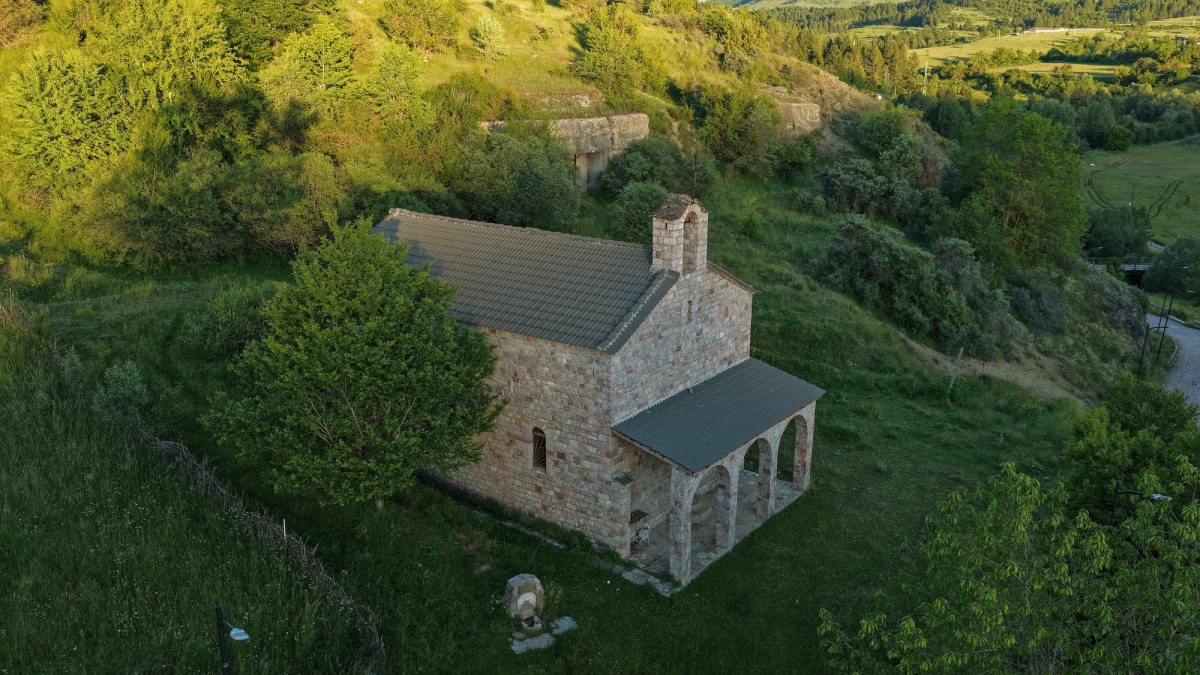
Korça and the East
Region
A high plateau near the Greek and Macedonian borders, with a French-influenced town on it.
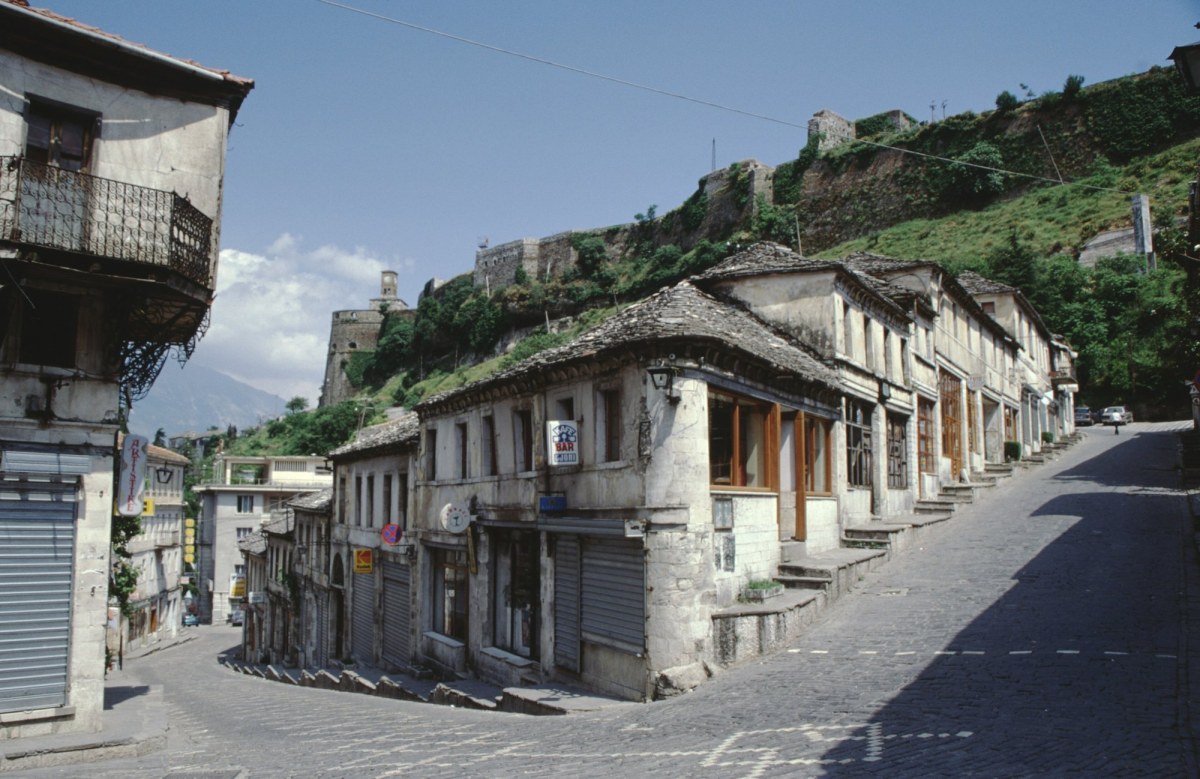
Southern Albania
Region
Stone towns, Greek and Roman ruins, springs and a lagoon, between the mountains and the sea.
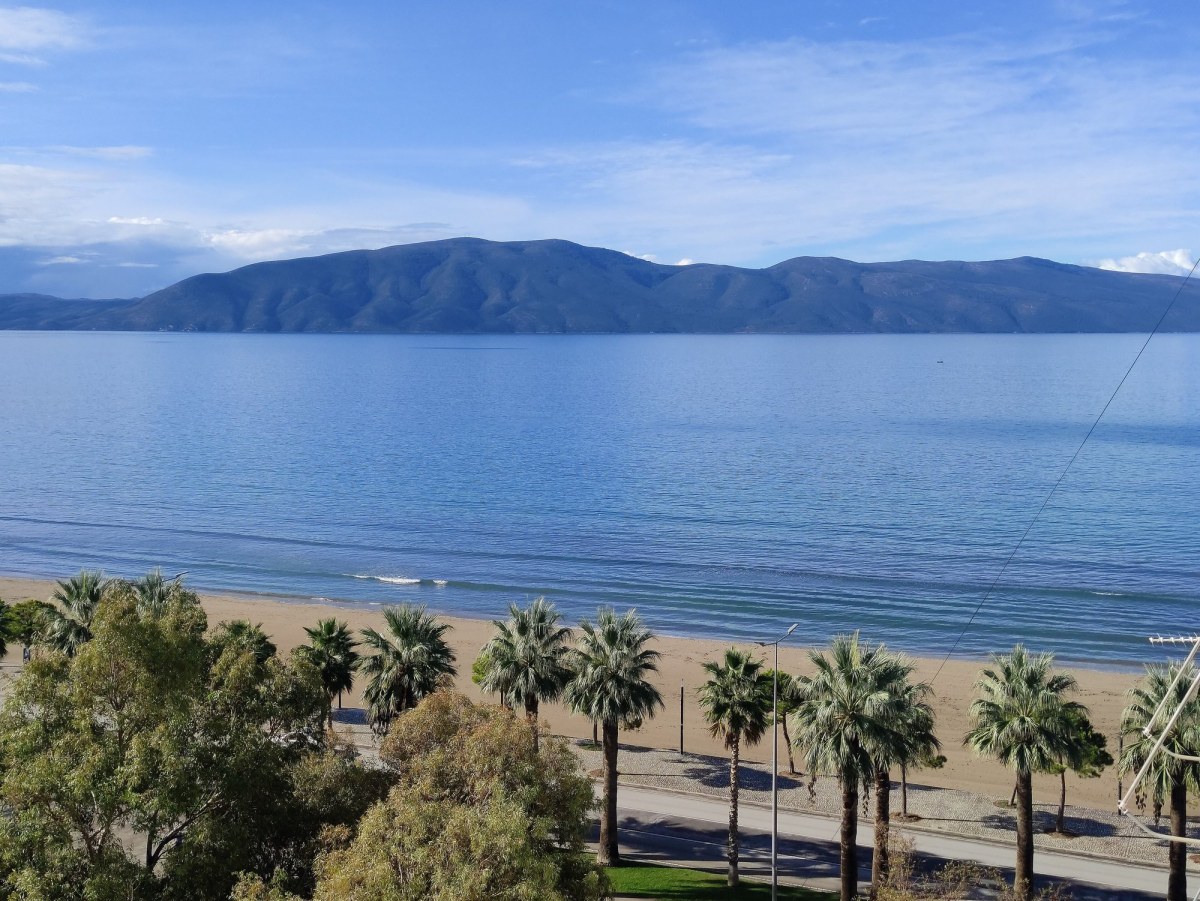
The Adriatic Coast
Region
Long flat sandy beaches and lagoons north of Vlorë, with the country’s ports on them.
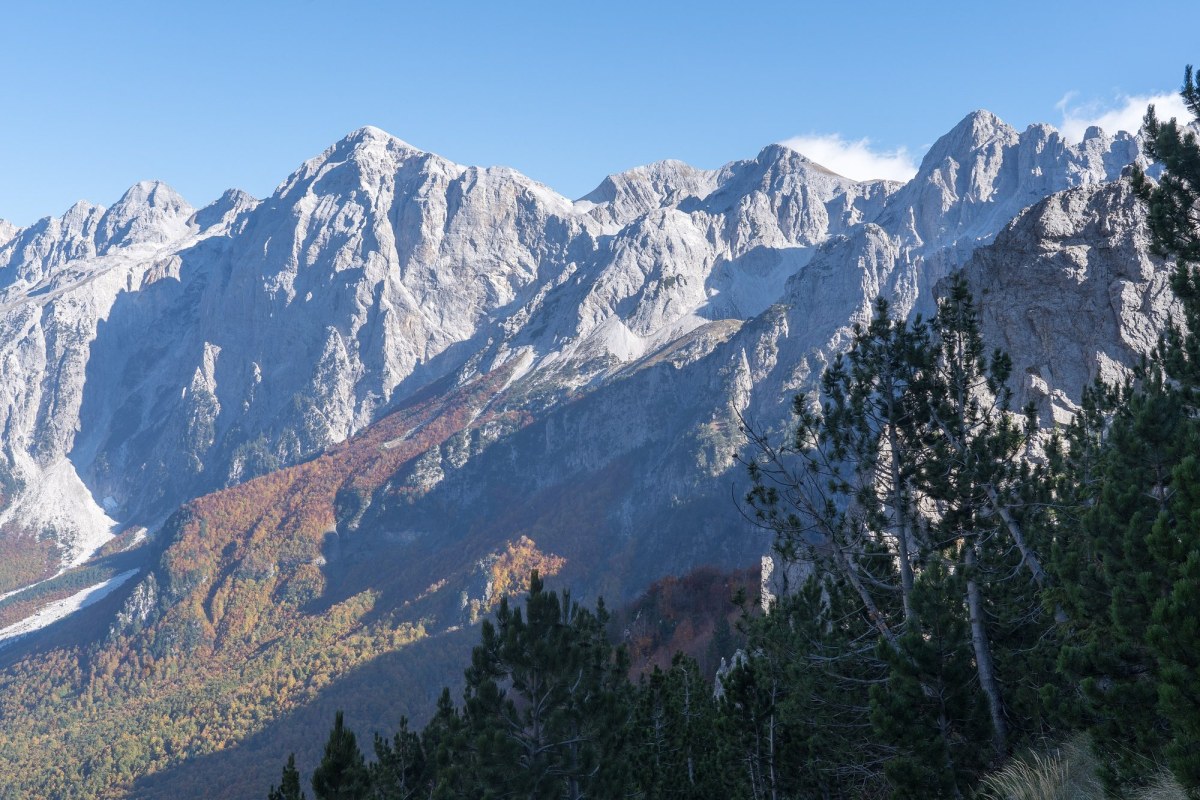
The Albanian Alps
Region
Sharp limestone mountains in the far north, reached by a ferry up a flooded canyon.
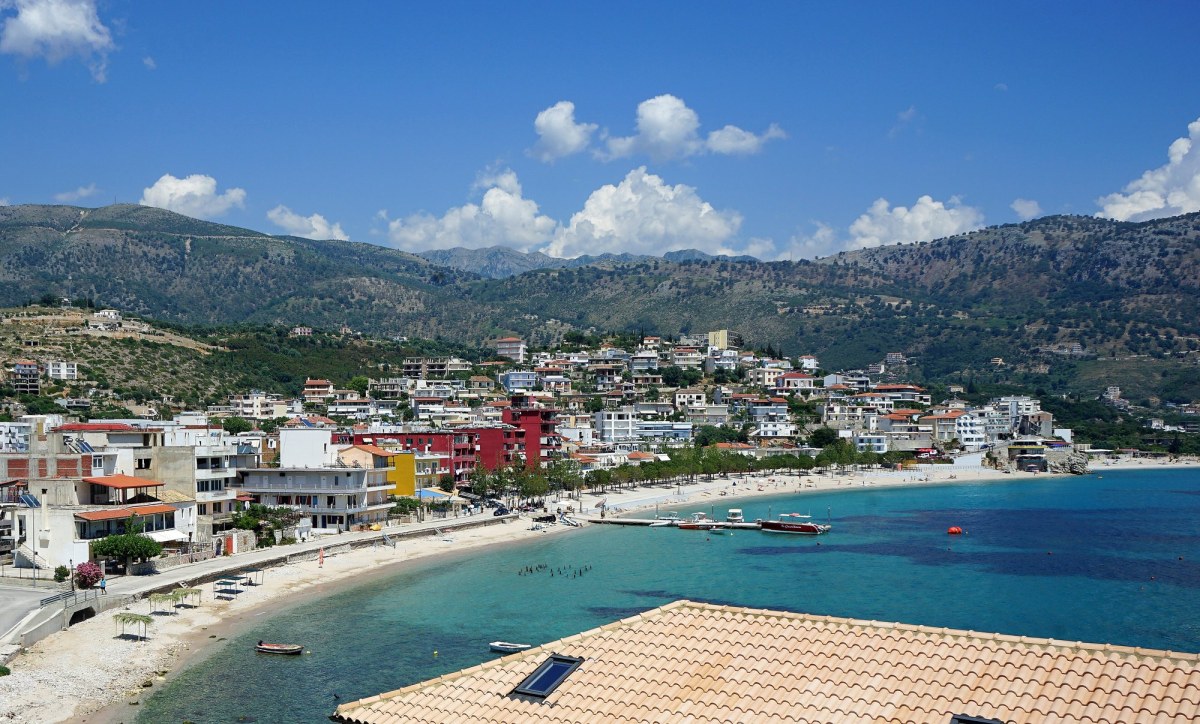
The Albanian Riviera
Region
A mountain coast of pebble coves and stone villages, reached over a high pass.
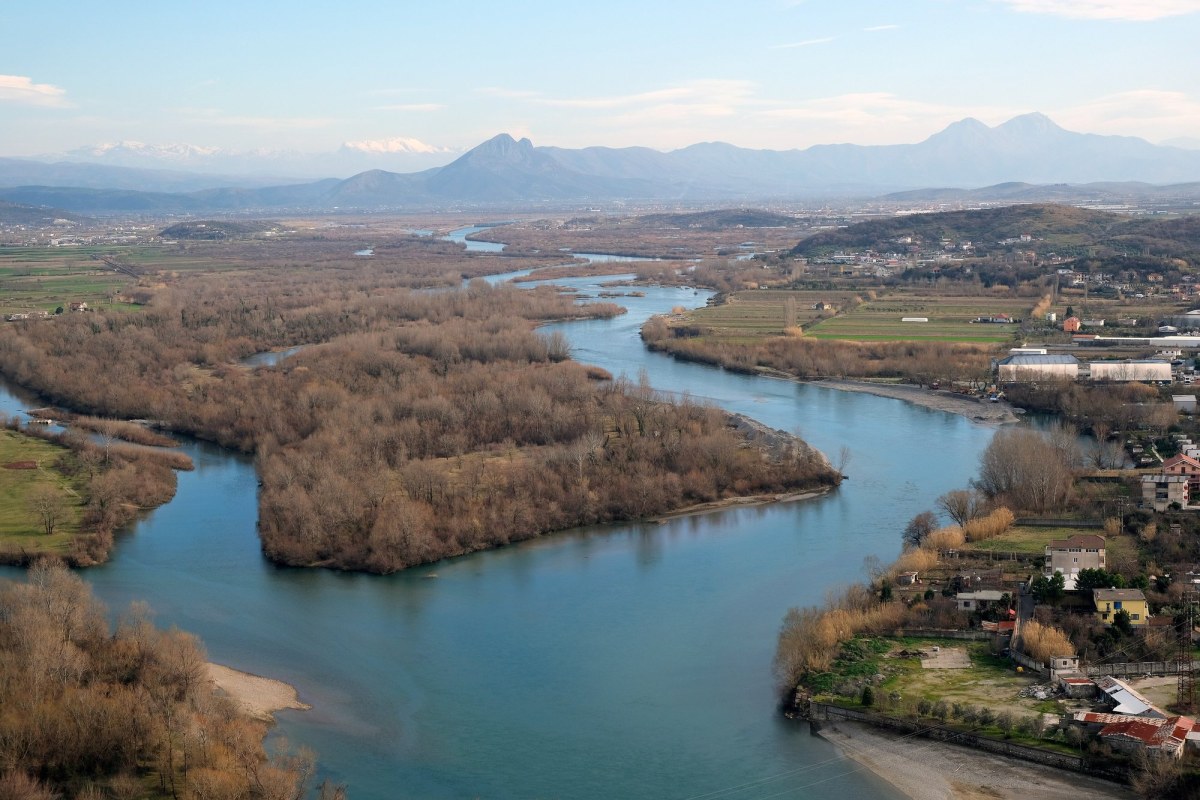
The Drin Valley
Region
A river turned into a chain of reservoirs in canyons, crossed by ferries in the north.
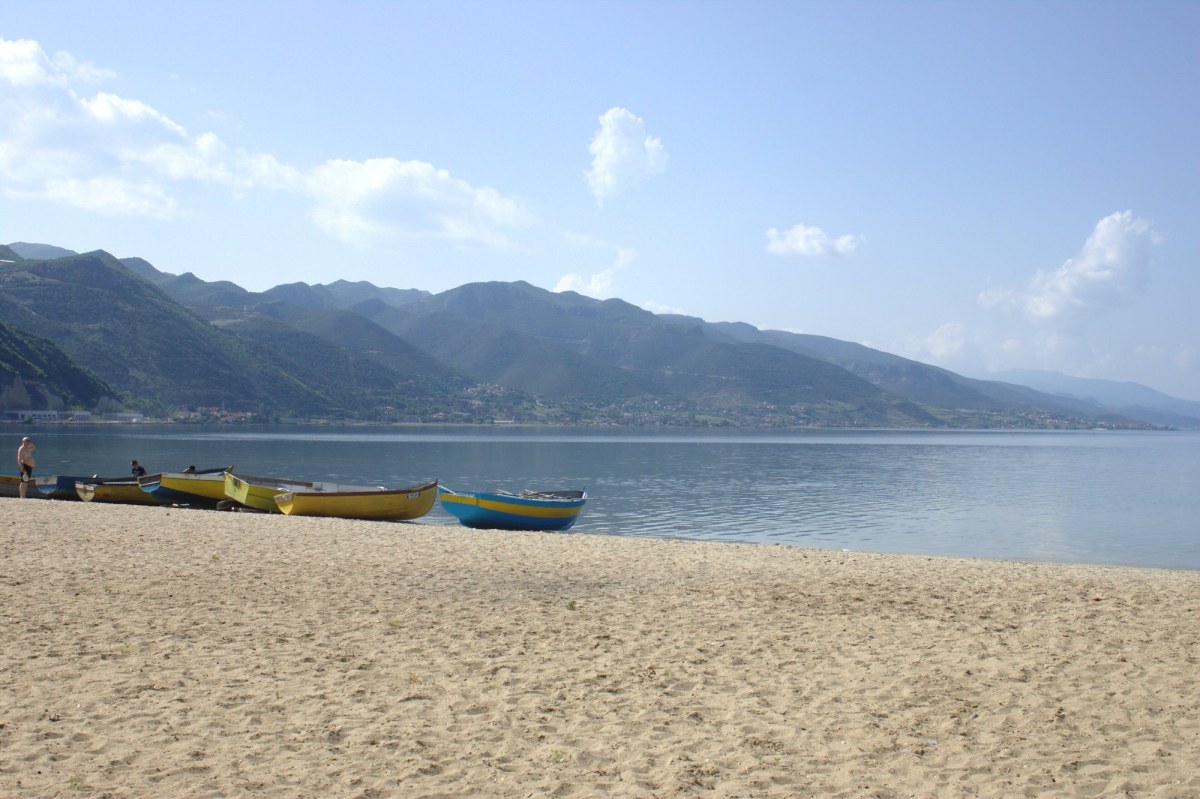
The Lakes of the South-East
Region
Ohrid and Prespa on the eastern border, shared with two neighbours and full of endemic life.
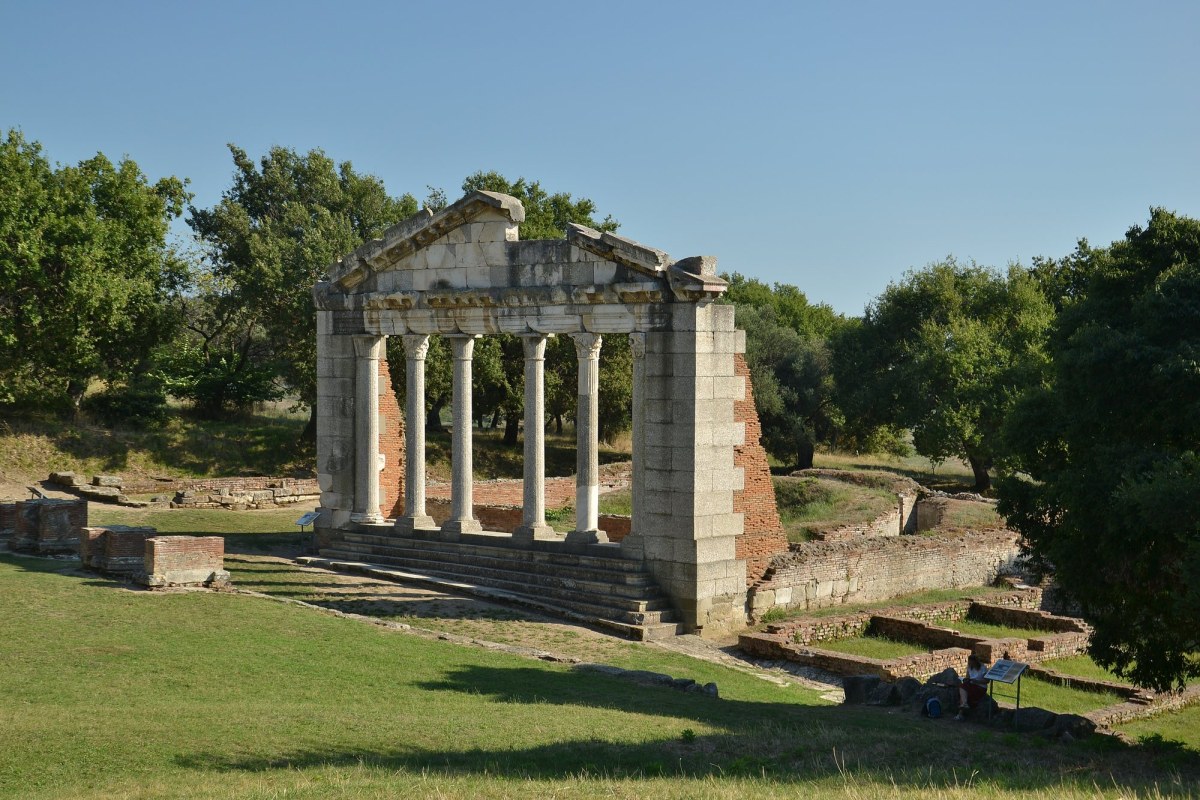
The Myzeqe Plain
Region
The flat agricultural heart of the country, with two great ancient cities on its edges.
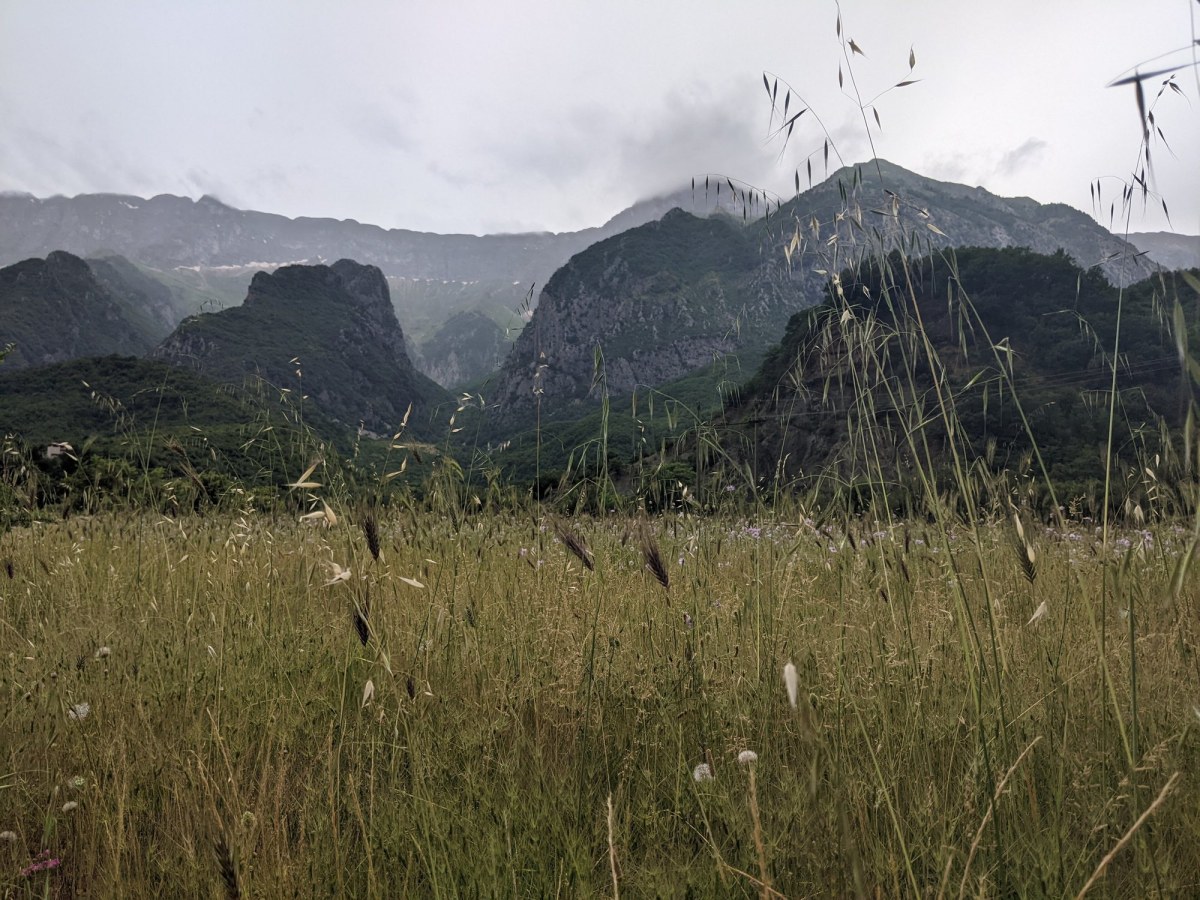
The Vjosa Valley
Region
One of the last wild rivers in Europe, running undammed from the mountains to the sea.
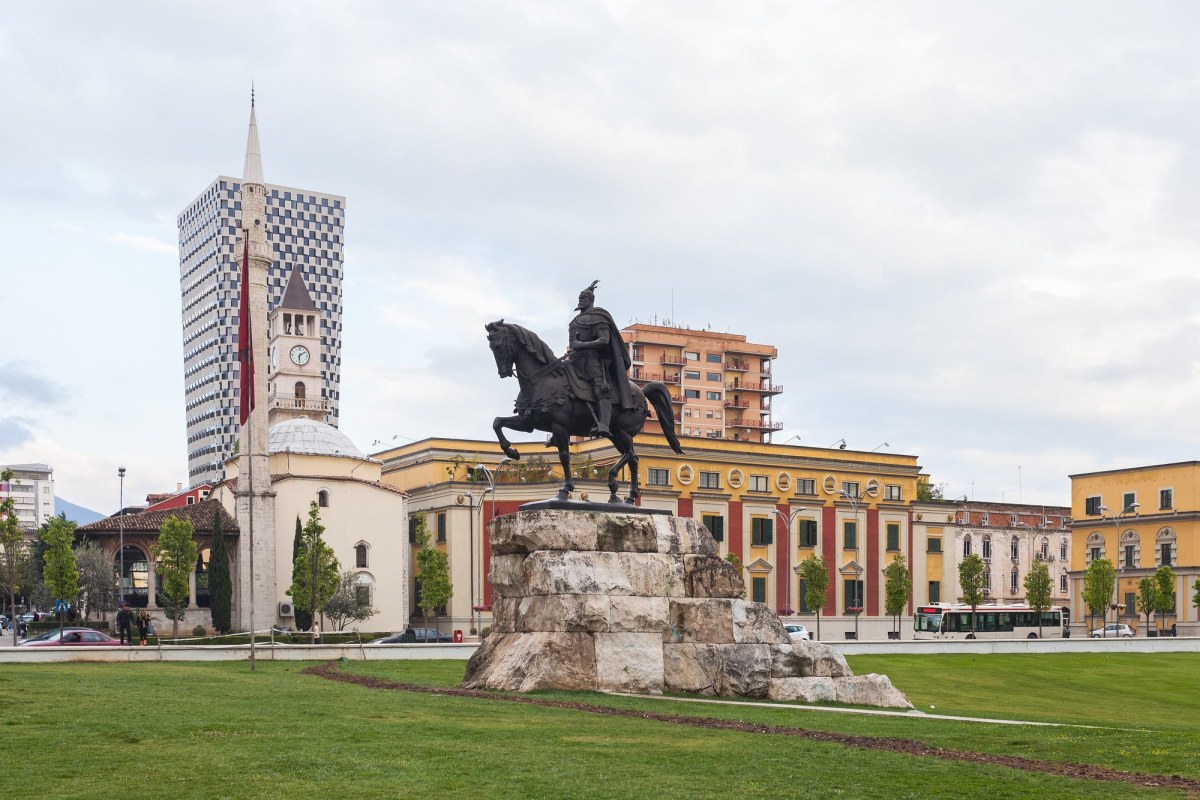
Tirana and the Centre
Region
The capital in a plain below a mountain, changing faster than anywhere else in the country.
Inside Albania
Towns and cities
12 to explore
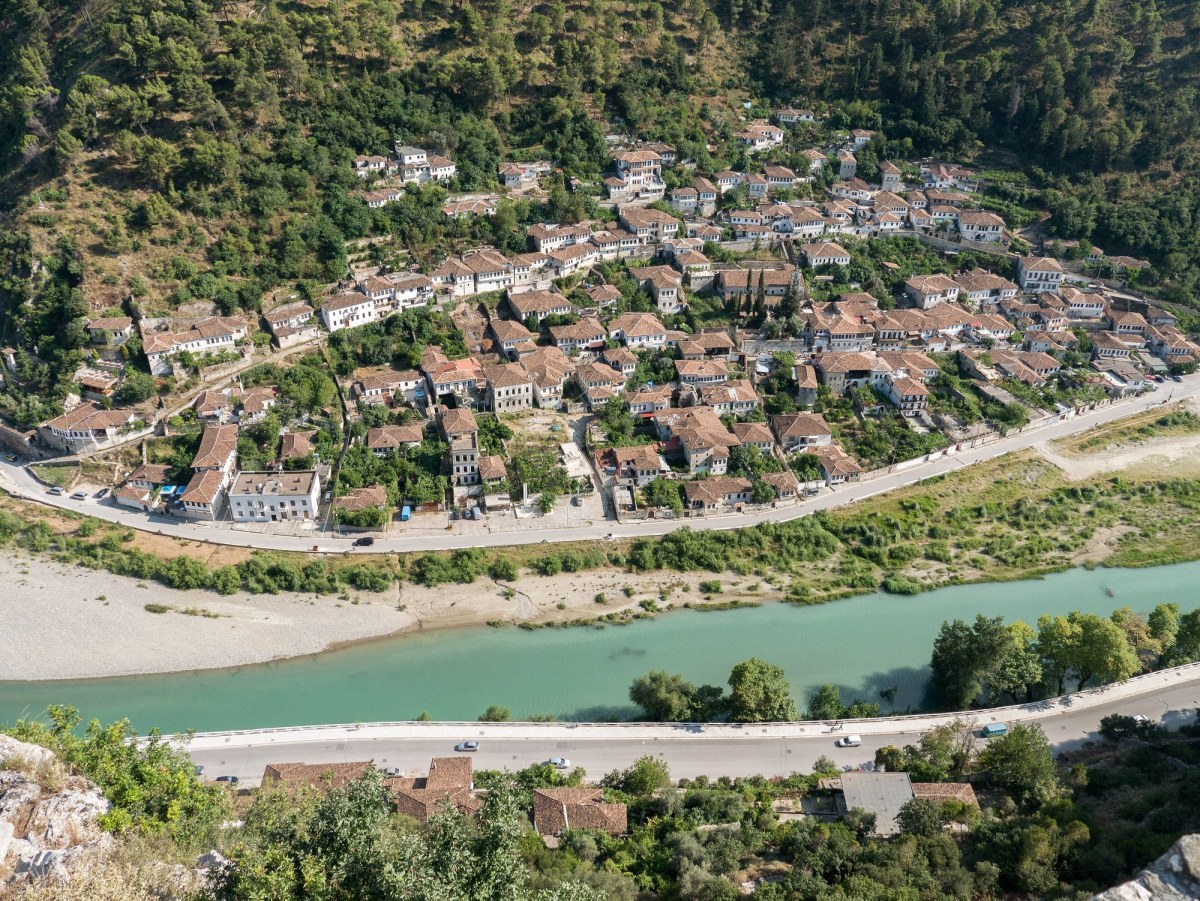
Berat
Town or city
The town of a thousand windows: white Ottoman houses stacked up two hillsides under a castle.
Durrës
Town or city
The main port, with the largest Roman amphitheatre in the Balkans under the modern town.
Gjirokastër
Town or city
A stone town of tower houses on a steep slope, under one of the largest castles in the Balkans.
Himarë
Town or city
A Riviera town of an old upper village and a lower shore, with a Greek-speaking population.
Përmet
Town or city
A small town on the Vjosa with hot springs, an Ottoman bridge and a rock in the middle of it.
Sarandë
Town or city
A seafront town facing Corfu across a narrow strait, and the base for the south.
Shkodër
Town or city
The northern city, on a lake below a castle, with bicycles and a strong Catholic tradition.
Theth
Town or city
A village at the head of a valley in the Alps, with a church, a waterfall and a lock-in tower.
Tirana
Town or city
A capital of painted blocks and bunkers, changing faster than any other in the region.
Inside Albania
Landmarks
12 to explore
Berat Old Town
Landmark
White Ottoman houses in tiers on two facing hillsides, and a castle quarter still lived in.
Butrint
Landmark
A Greek, Roman, Byzantine and Venetian city on a wooded peninsula between a lagoon and the sea.
Gjirokastër Castle
Landmark
One of the largest castles in the Balkans, holding a gun gallery and a captured aircraft.
Ksamil
Landmark
Shallow bays and small islands close enough to wade to, at the southern tip of the coast.
Lake Koman Ferry
Landmark
A working ferry the length of a flooded canyon, calling at villages with no road.
Llogara Pass
Landmark
A road climbing through pine forest to a high saddle and dropping straight to the Ionian.
Rozafa Castle
Landmark
A castle on a rock above three rivers, with a founding legend about a walled-in woman.
Valbona Valley
Landmark
A flat-floored glacial valley in the Alps with a wide white riverbed and walls of rock.
Plan the trip
Explore Albania
Start with the regions, then the towns, then the sights worth a detour — each with its own page and its own pin on the map.
Start anywhere and follow the links. The guides and itineraries join these places into routes you can actually travel.
Credit: Europe by Giddo
Every place above is on this map. The lists on this page are the same content in the same order.